5 Habits That Will Keep You Lifting For Years
Getting stronger isn’t about destroying yourself every workout.
Here are 5 habits that will keep you training smart, staying consistent, and lifting for years to come.

Getting stronger isn’t about destroying yourself every workout.
Here are 5 habits that will keep you training smart, staying consistent, and lifting for years to come.
Training Over 50 5 Strength Training Mistakes Women Over 50 Make Strength training after 50 can be one of the best things you do for your body — but the way you train matters. What You’ll Learn ✓ Why strength training matters after 50 ✓ The most common mistakes holding women back ✓ How to…
Too many women over 50 believe they need to train harder. I believe they need to train smarter.
In this article, I break down exactly how I’d approach training if I were a woman over 50 — covering strength, muscle, mobility, stability, and explosive power, and why all five need to work together
if your goal is staying strong, active, and independent for decades to come. This isn’t about training like you’re 25. It’s about training in a way that helps you feel your best at 50, 60, 70, and beyond.
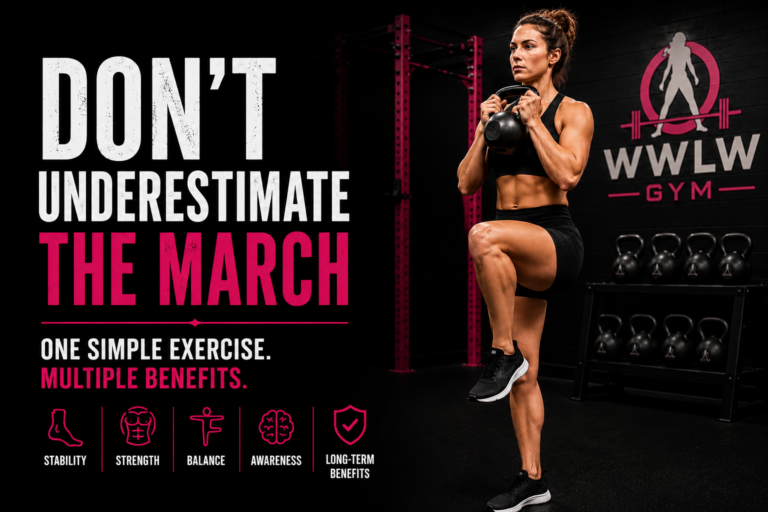
One of the most underrated exercises in strength training?
The weighted march.
It might look simple, but don’t let that fool you.
Whether you’re holding a dumbbell or kettlebell, marches challenge your body from the ground up.
They help improve:
✓ Foot and ankle stability
✓ Knee and hip control
✓ Core strength
✓ Balance and coordination
✓ Body awareness
✓ Posture and control
As we get older, maintaining strength is important.
But so is maintaining balance, stability, and confidence in how we move.
That’s one reason you’ll find marches included in many of my training programs and workouts.
Simple exercises often provide some of the biggest benefits.
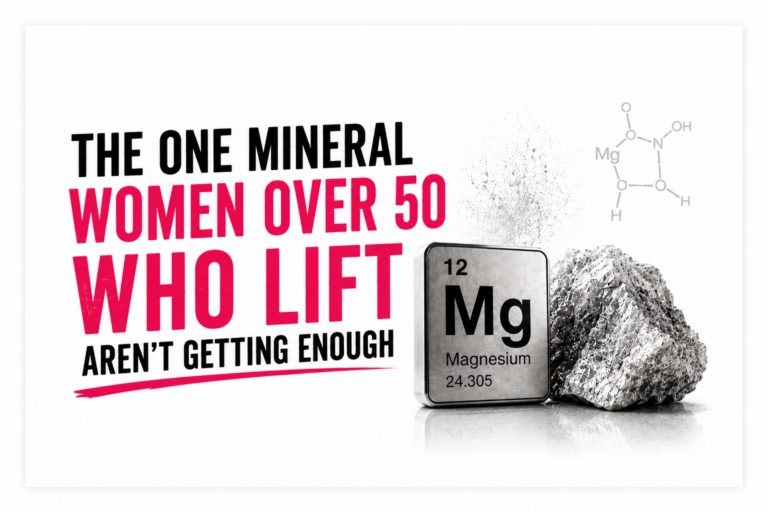
Magnesium is involved in more than 300 biochemical reactions inside your body every single day. It helps support normal muscle function, energy production, healthy nerve function, bone health, and much more—all of the systems that help keep you moving, lifting, and recovering.
Some coaches insist that if you’re not training to failure, you’re wasting your workout. Others argue you should never train to failure because it’s too hard on your body.
So who’s right?
The truth is a little more nuanced than either extreme.
Machines are a great place to start. They’re excellent for building confidence, learning movements, and training around injuries or limitations.
But if your goal is to build strength that carries over into everyday life, improve balance, mobility, and stability, free weights should become the foundation of your training.
The biggest mistake I see women over 50 make in the gym, why it’s so common, and the four essential qualities every woman should include in her training to build a stronger, healthier, and more resilient body.