If I Were A Woman Over 50… Here’s Exactly How I’d Train
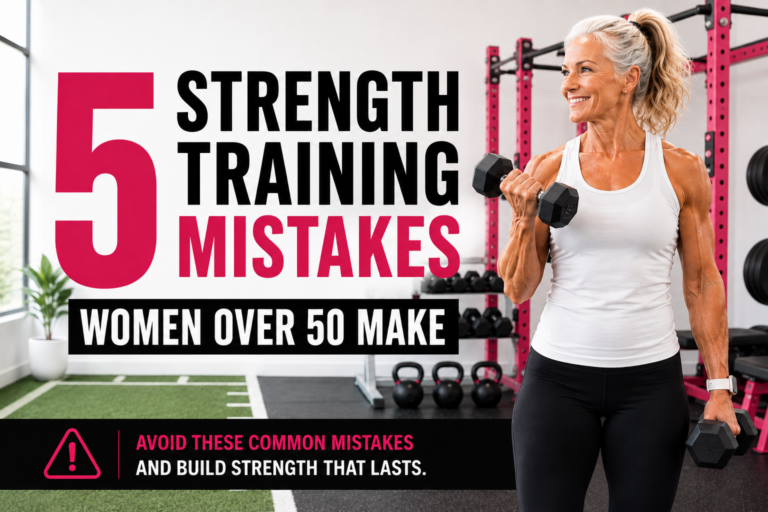
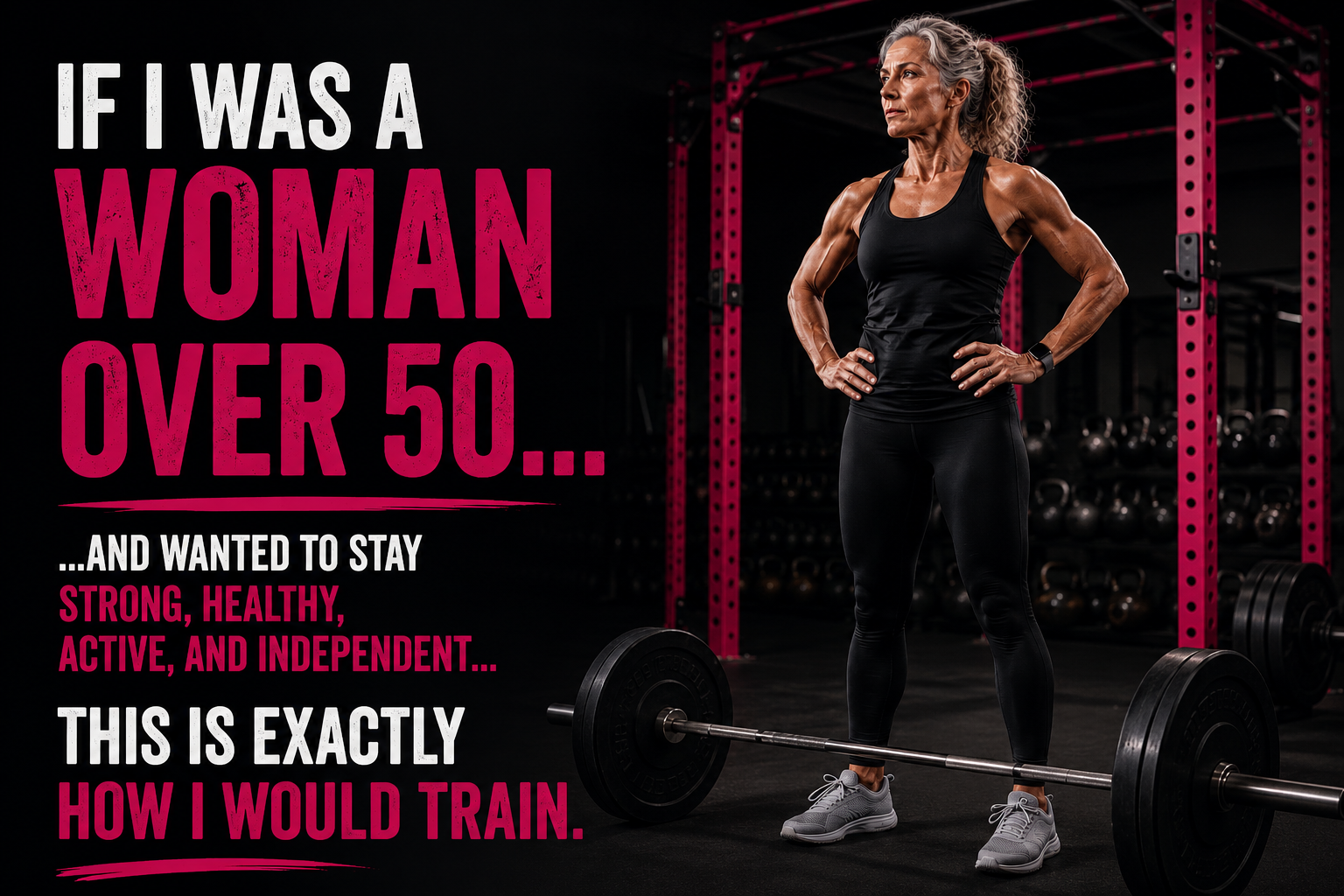
If I were a woman over 50 and wanted to stay strong, healthy, active, and independent, this is exactly how I would train.
Too many women believe they need to train harder.
I believe they need to train smarter.
After 50, your goal isn’t to survive one brutal workout. It’s to build a body that stays strong, capable, and resilient for decades. That shift in thinking changes everything about how you should be training — and it’s exactly where most training advice for women over 50 gets it wrong.
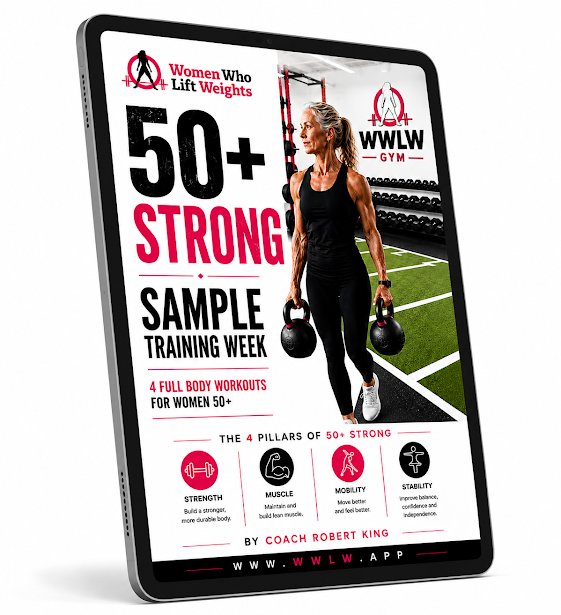
Here’s what I’d focus on:
You don’t need to train like you’re 25. You need to train in a way that helps you feel your best at 50, 60, 70, and beyond.
Don’t Train For Today.
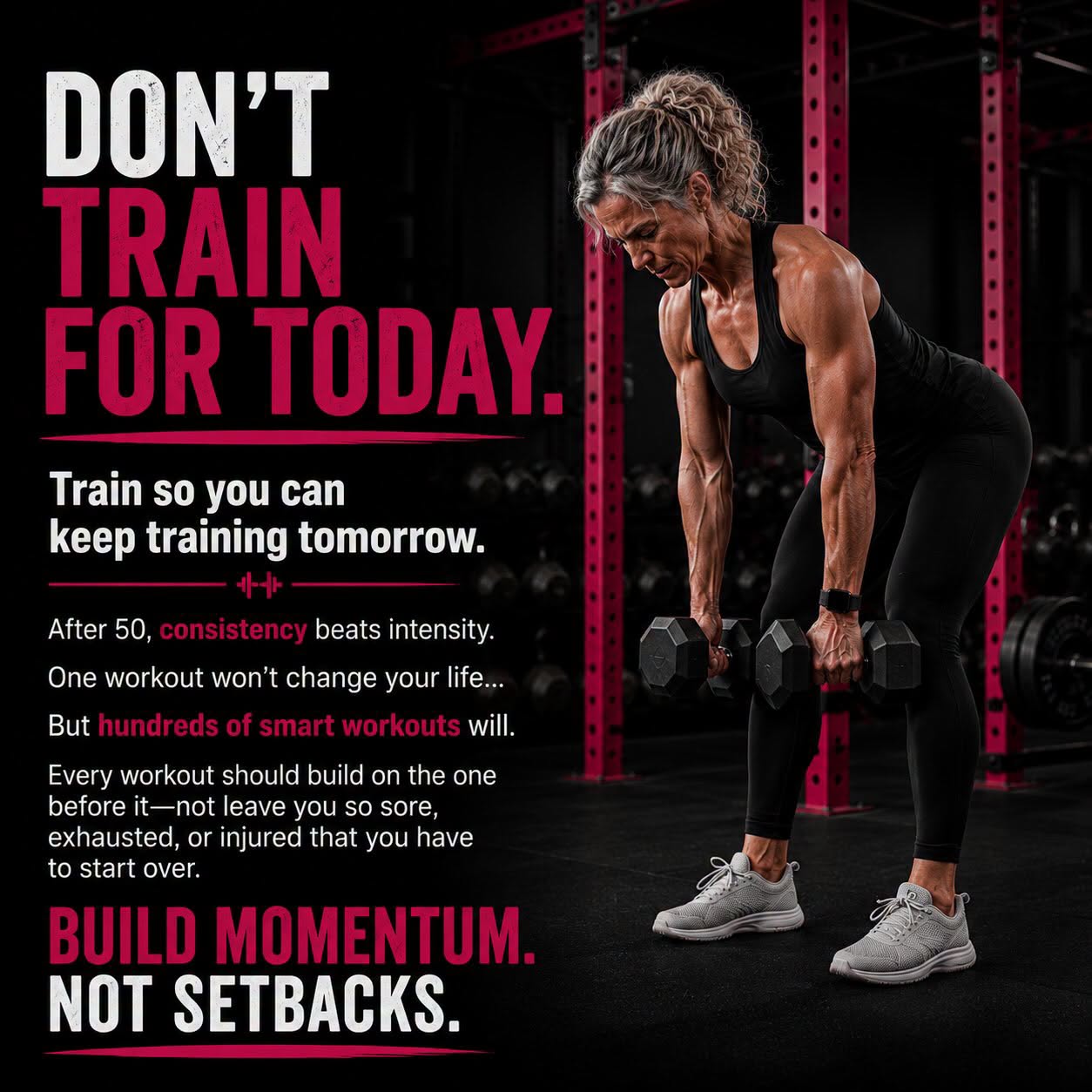
After 50, consistency beats intensity. One workout won’t change your life. But hundreds of smart workouts will.
That single shift changes how you should be thinking about every session you do. The goal isn’t to crush yourself in the gym today — it’s to walk out feeling capable of showing up again tomorrow, and the day after that, and the week after that.
Every workout should build on the one before it — not leave you so sore, exhausted, or injured that you have to start over. A workout that sidelines you for a week isn’t progress. It’s a setback wearing a costume.
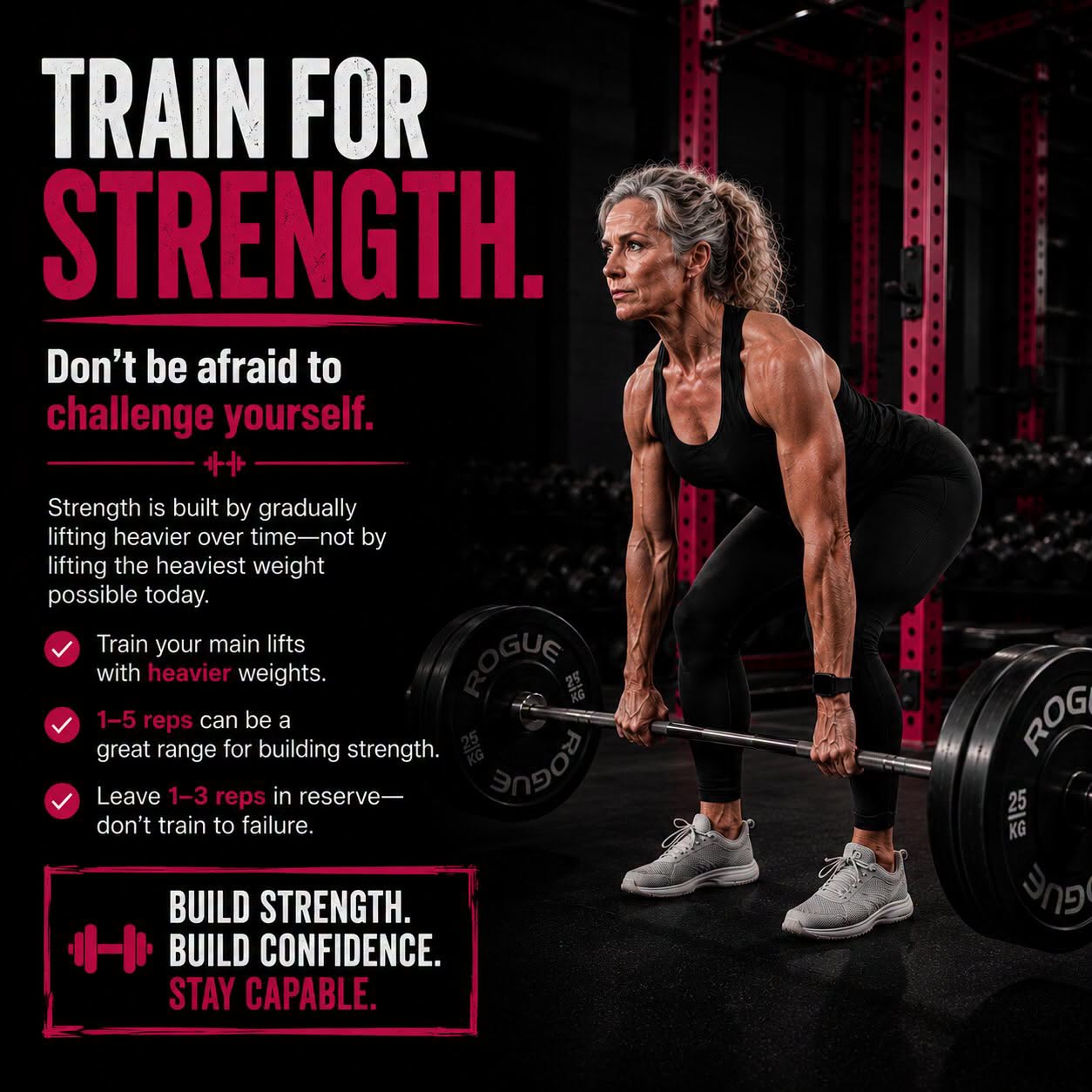
Train For Strength
Strength is built by gradually lifting heavier over time — not by lifting the heaviest weight possible today.
That’s the whole game. You’re not chasing a one-rep max to prove something. You’re building a foundation, one well-executed set at a time, that keeps getting stronger over months and years.
- Train your main lifts with heavier weights.
- 1–5 reps can be a great range for building strength.
- Leave 1–3 reps in reserve — don’t train to failure.
Build Strength. Build Confidence. Stay Capable.
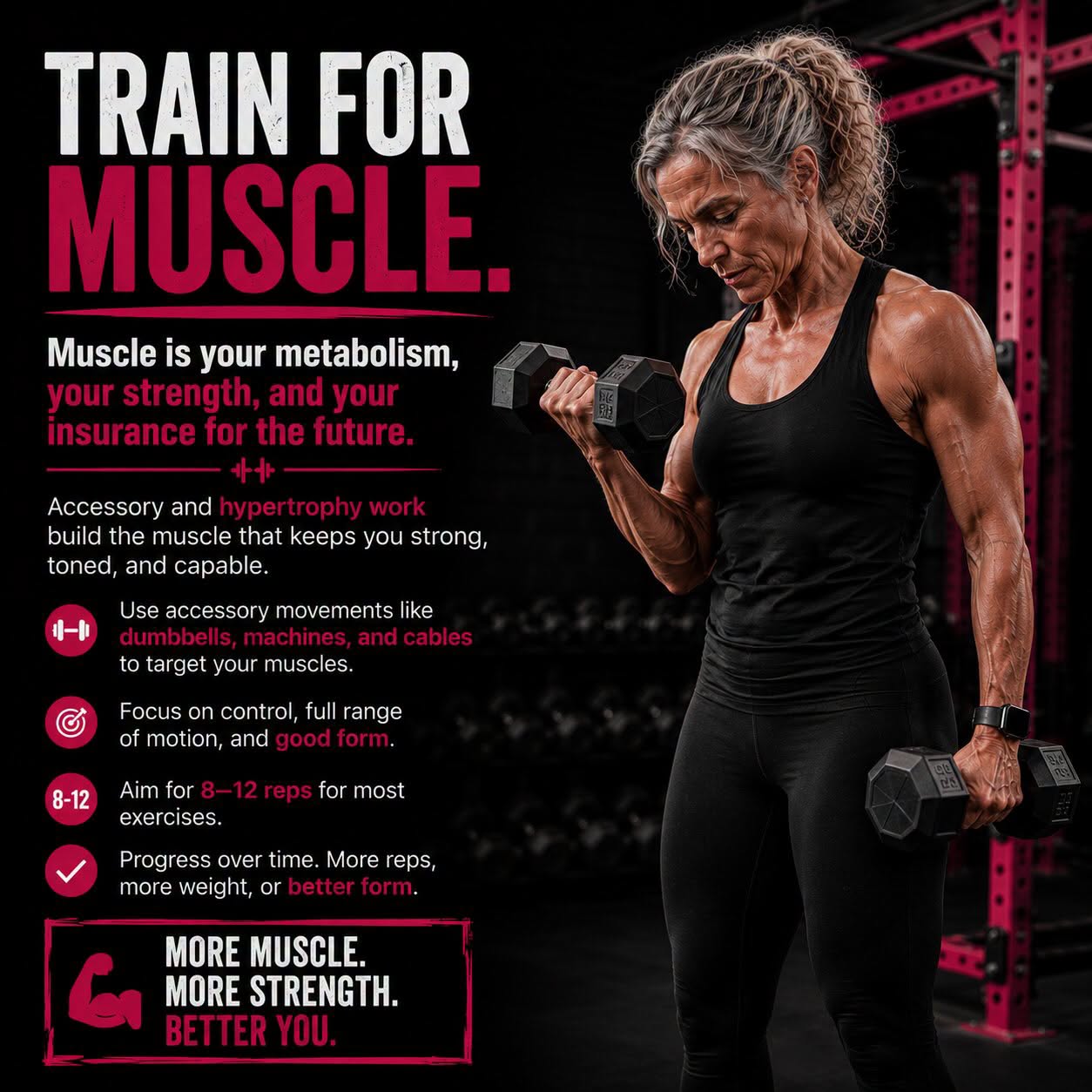
Train For Muscle
Accessory and hypertrophy work build the muscle that keeps you strong, toned, and capable.
This is where a lot of women skip a step. Your main lifts build the foundation, but accessory work is what fills in the gaps — supporting your joints, balancing out your strength, and giving your body the muscle reserve it needs as the years go on.
More Muscle. More Strength. Better You.
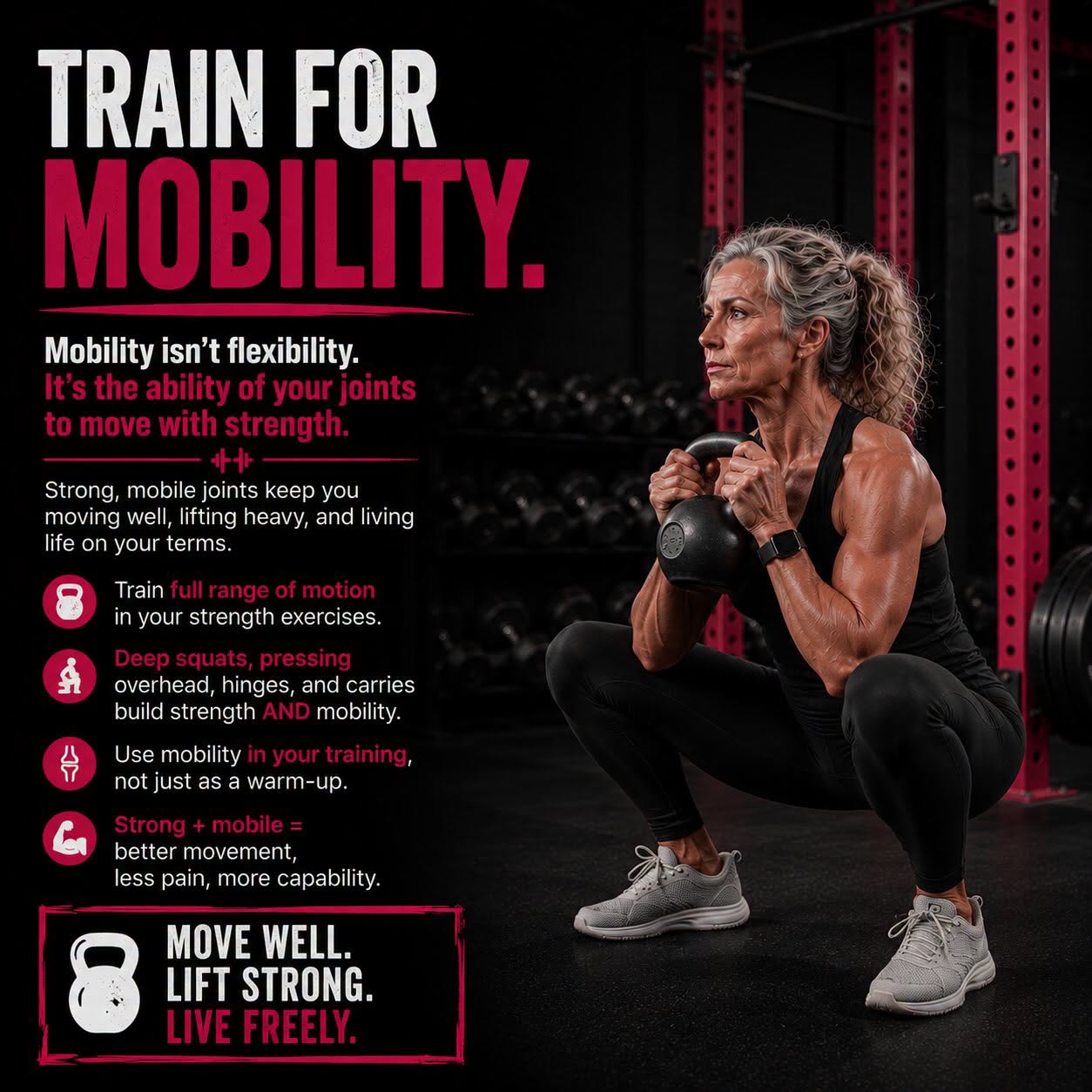
Train For Mobility
Strong, mobile joints keep you moving well, lifting heavy, and living life on your terms.
That distinction matters more than most people realize. Being flexible doesn’t mean much if your joints can’t control that range of motion under load. Real mobility is strength through your full range — not just how far you can stretch.
Move Well. Lift Strong. Live Freely.
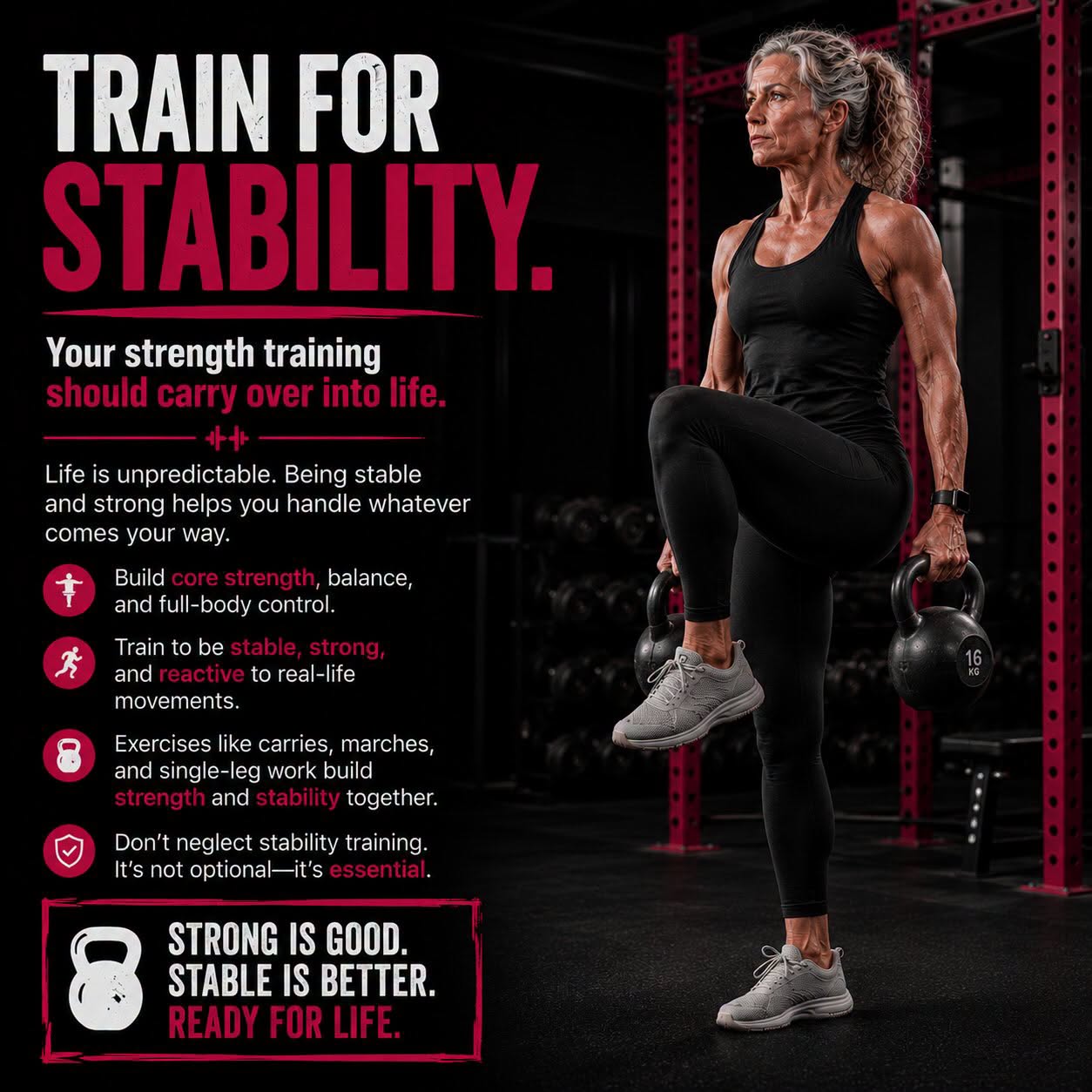
Train For Stability
Stability training improves your balance, coordination, and confidence in everyday life — the kind of confidence that shows up when you step off a curb, catch yourself on uneven ground, or carry something heavy up a flight of stairs.
This is one of the most overlooked pieces of training as we age. It’s easy to focus entirely on strength and skip the training that teaches your body to control itself under less predictable conditions. Stability work closes that gap.
Stay Balanced. Stay Confident. Stay Independent.
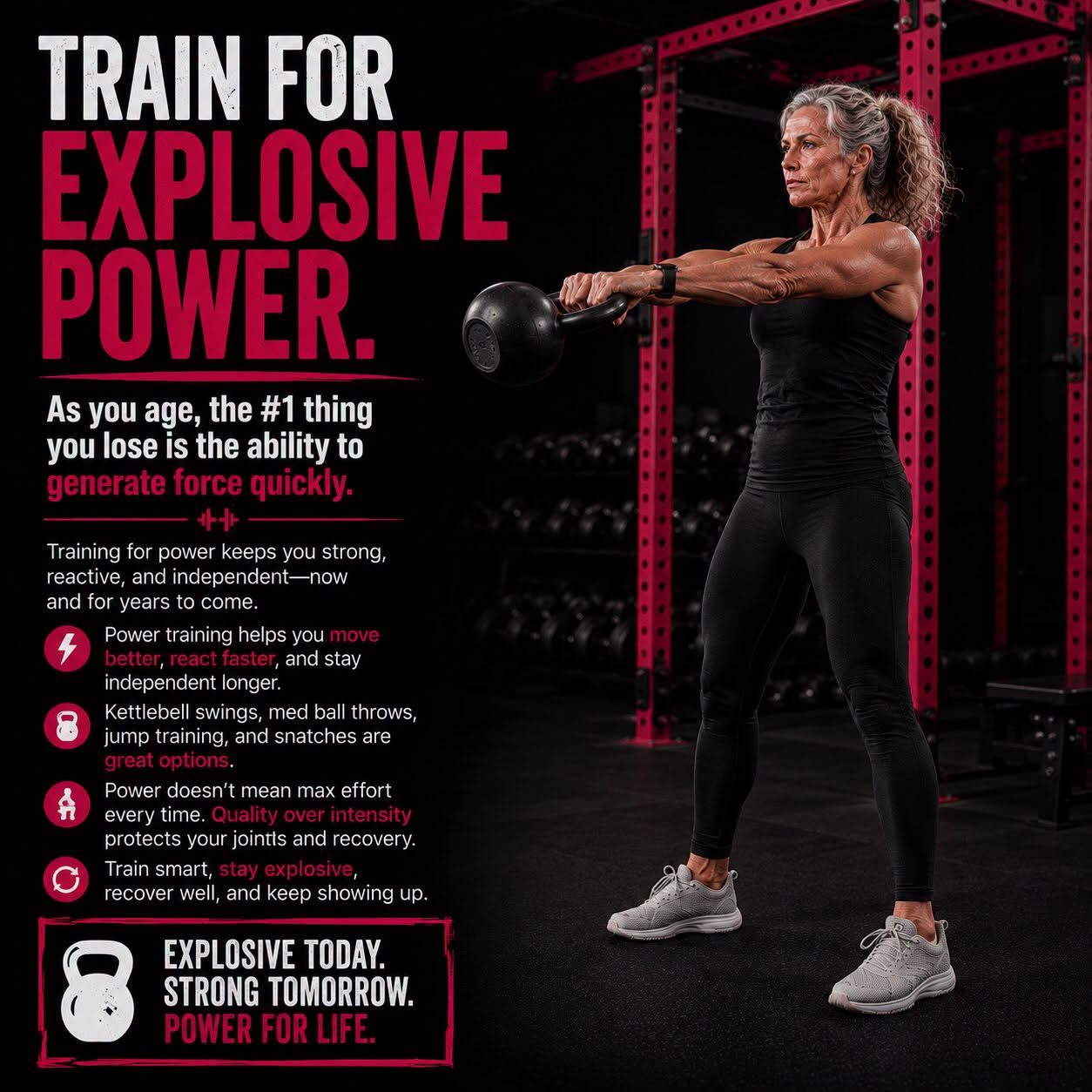
Train For Explosive Power
Training for power keeps you strong, reactive, and independent — now and for years to come.
Power is the first thing to fade, and the easiest thing to keep if you train for it. It’s what lets you catch yourself before a fall, react quickly, and move with confidence — not just strength in slow motion, but strength you can actually use in a split second.
Explosive Today. Strong Tomorrow. Power For Life.
If I Were A Woman Over 50, This Is Where I’d Start
None of these five focuses work in isolation. That’s the whole point. Strength without stability doesn’t fully protect you. Mobility without power doesn’t fully prepare you. Real training after 50 means all five working together.
You don’t need to train like you’re 25. You need to train in a way that helps you feel your best at 50, 60, 70, and beyond. That’s not a smaller version of training — it’s a smarter one.