Should Women Over 50 Train To Failure?
One of the most common questions I get from women over 50 is:
“Should I be training every set until I physically can’t do another rep?”
It’s a fair question.
Spend a few minutes scrolling through social media and you’ll hear completely opposite advice.
Some coaches insist that if you’re not training to failure, you’re wasting your workout. Others argue you should never train to failure because it’s too hard on your body.
So who’s right?
The truth is a little more nuanced than either extreme.
After coaching women for more than 30 years—from complete beginners to IPF World Champions—I’ve found that the answer depends on what you’re training, why you’re training it, and how well you’re able to recover.
For most women over 50, training smarter will almost always produce better long-term results than simply training harder.
Let’s take a closer look.
What Does “Training to Failure” Actually Mean?
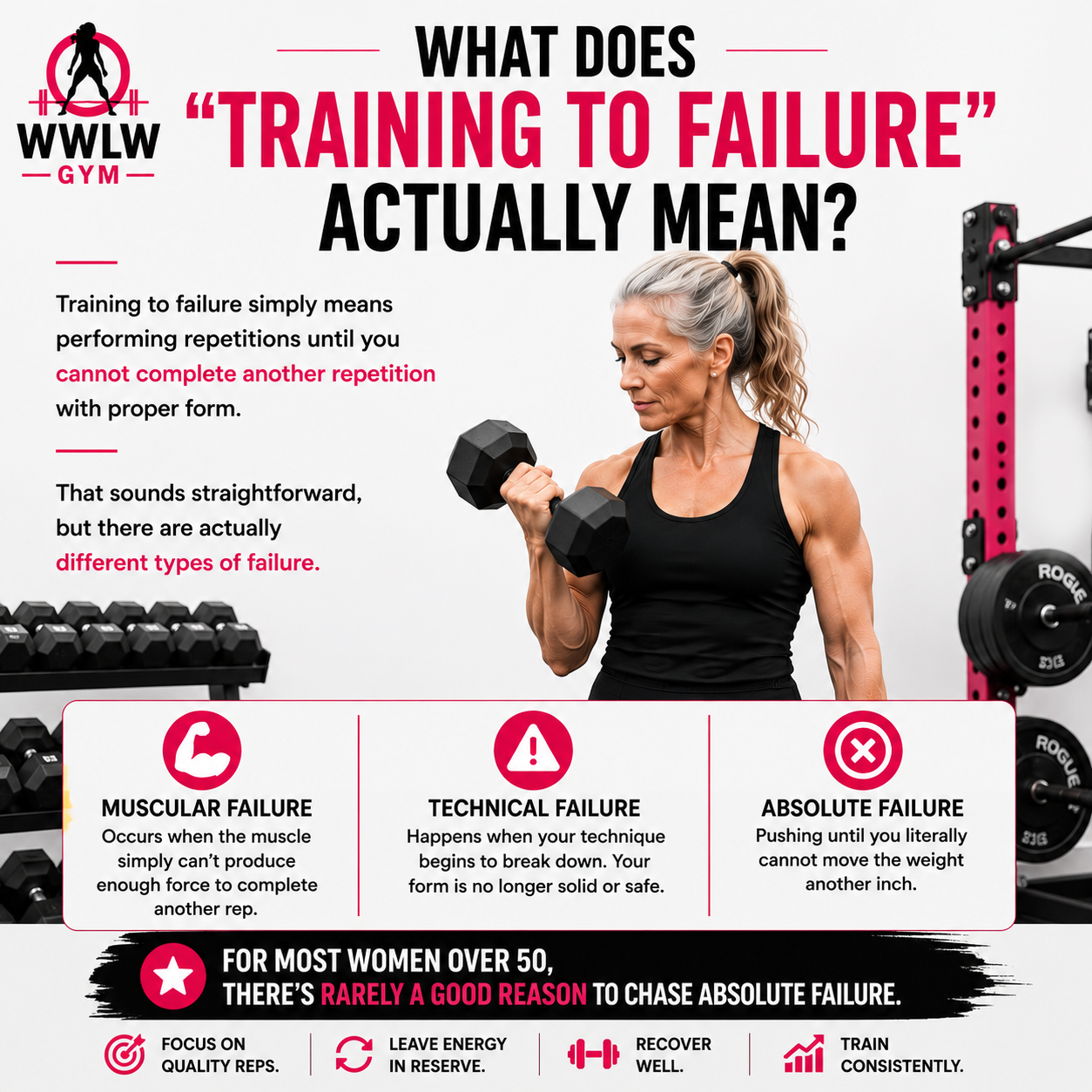
Training to failure simply means performing repetitions until you cannot complete another repetition with proper form.
That sounds straightforward, but there are actually different types of failure.
Muscular Failure occurs when the muscle simply can’t produce enough force to complete another repetition.
Technical Failure happens when your technique begins to break down. Maybe your back rounds during a deadlift, your knees collapse during a squat, or you start using momentum to finish a dumbbell curl.
Absolute Failure is pushing until you literally cannot move the weight another inch.
For most women over 50, there’s rarely a good reason to chase absolute failure.
In fact, constantly pushing to that point often creates far more fatigue than additional progress.
Instead, I prefer focusing on quality repetitions while leaving just enough energy in reserve to recover well and train consistently.
Coach Rob’s Tip:
The goal isn’t to prove how tough you are during a single workout.
The goal is to build strength you can recover from, improve upon, and continue progressing with for years to come.
Recovery Changes After 50
One of the biggest differences between training at 25 and training at 55 isn’t motivation.
It’s recovery.
As we age, our bodies simply need more time to recover from hard training.
Muscle protein synthesis slows slightly. Connective tissues such as tendons and ligaments often take longer to heal. Hormonal changes during menopause and post-menopause can also affect recovery, sleep quality, and overall energy levels.
Recovery Reality
Recovery isn’t a sign of getting older or weaker. Recovery is part of getting stronger. The better you recover, the more consistently you can train—and consistency is what produces long-term results.
None of this means you can’t build strength or muscle after 50.
You absolutely can.
In fact, I’ve coached women in their 50s, 60s, and even 70s to become dramatically stronger than they ever imagined.
But recovery has to become part of your training plan.
“You don’t get stronger during your workout.
You get stronger when your body recovers from it.”
If every workout leaves you completely exhausted for three or four days, your recovery—not your motivation—becomes the limiting factor.
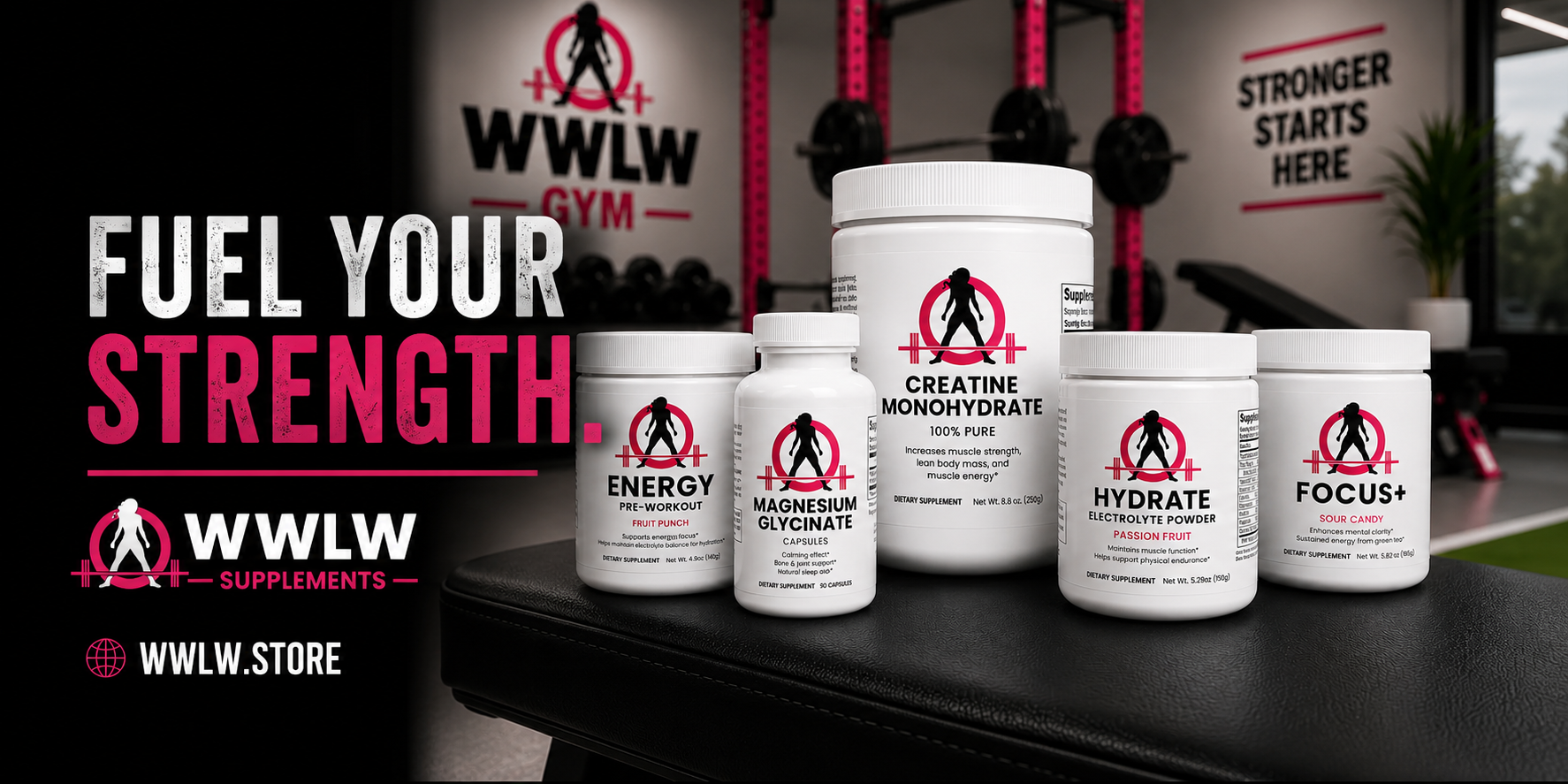
Click the image to shop WWLW Supplements.
Compound Movements Should Usually Stop With One or Two Reps Left
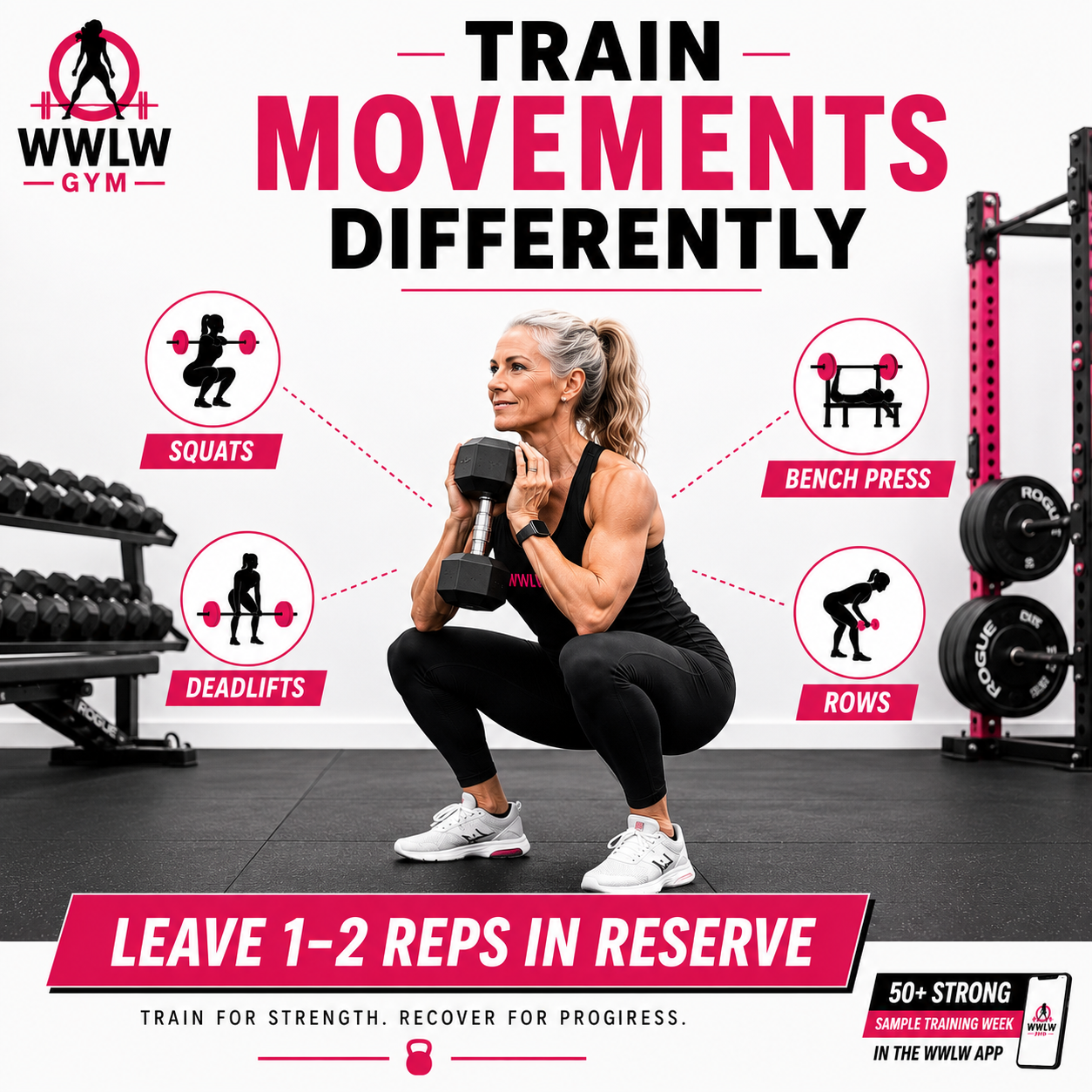
Exercises like squats, deadlifts, bench presses, overhead presses, and rows are very different from isolation exercises.
These compound movements train multiple muscle groups at the same time while also improving coordination, balance, stability, and overall movement quality.
Because they’re more demanding, they also create significantly more fatigue.
For that reason, I usually recommend that women over 50 finish these exercises with one or two good repetitions still in reserve.
What is Reps In Reserve (RIR)?
Reps In Reserve (RIR) simply means stopping a set while you still have one or two high-quality repetitions left. You finish the set knowing you could have completed another rep or two—but you intentionally choose not to.
Imagine you finish a set of goblet squats and honestly feel like you could have completed two more perfect repetitions.
That’s exactly where I want most training sets to end.
Why Leave 1–2 Reps In Reserve?
- Maintain better lifting technique.
- Recover faster between workouts.
- Reduce unnecessary joint stress.
- Perform better during your next training session.
Could you occasionally take a squat or deadlift to failure?
Absolutely.
There are times when experienced lifters intentionally do this as part of a well-designed training program.
But that’s very different from making every workout a competition against yourself.
Training is about accumulating quality work over months and years—not winning a single workout.
Isolation Exercises Can Be Trained Differently
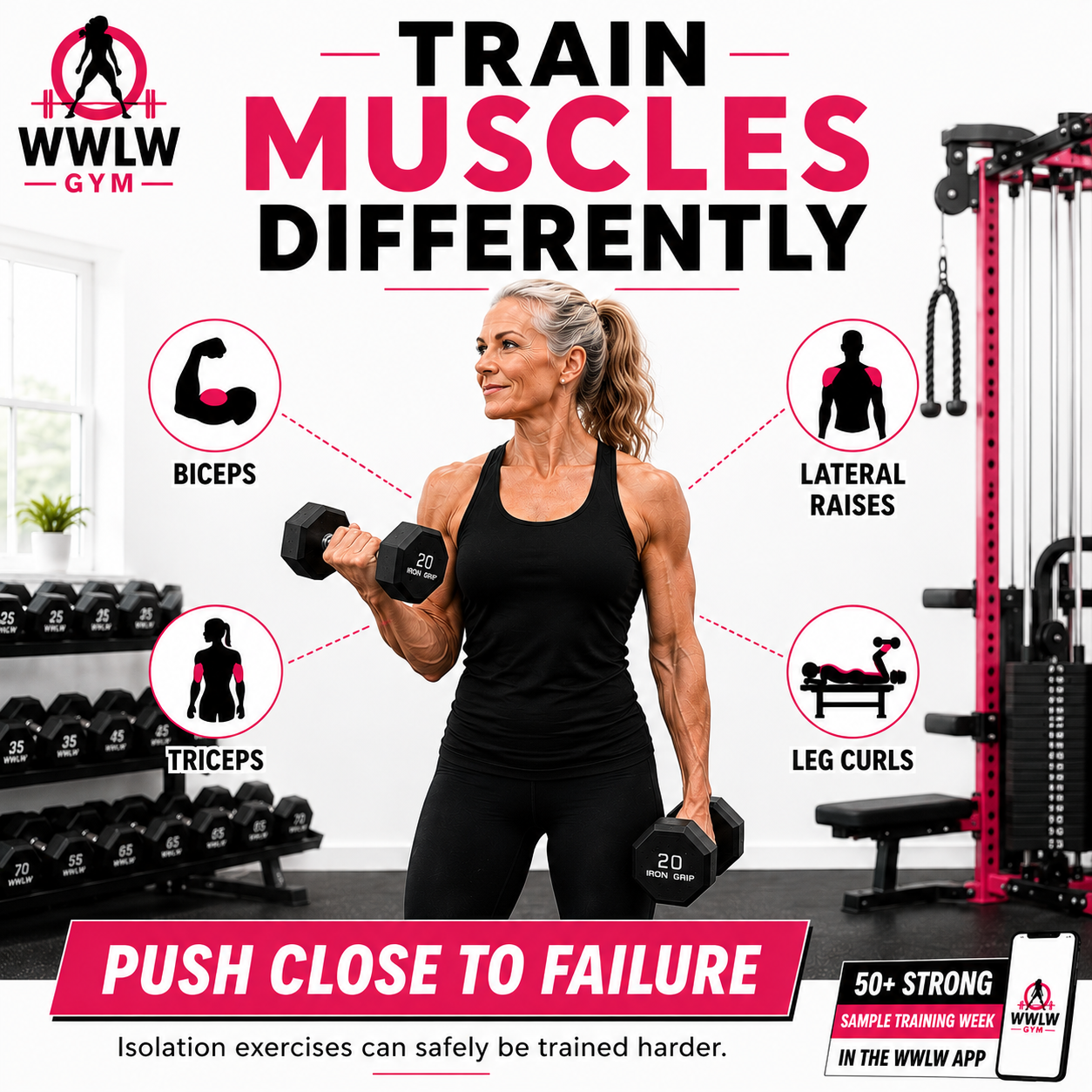
Isolation exercises are a different story.
Think about movements like:
Common Isolation Exercises
These exercises focus primarily on one muscle or one muscle group.
Because they place much less overall stress on your nervous system and joints, they’re generally much safer to train closer to failure.
In fact, this is often where some of the best muscle-building stimulus occurs.
Why?
Isolation exercises allow you to challenge a specific muscle without creating the same overall fatigue as heavy compound lifts. That’s why pushing these movements closer to failure is often both safe and effective.
If you’re performing a set of dumbbell curls and the last repetition is extremely challenging, that’s perfectly acceptable—as long as your technique stays under control.
The same applies to lateral raises, leg curls, triceps extensions, and other isolation movements.
You don’t need to stop every set early.
Remember
Training close to failure doesn’t mean every single set has to be an all-out battle.
Even isolation exercises require recovery.
Train Smarter — Not Just Harder
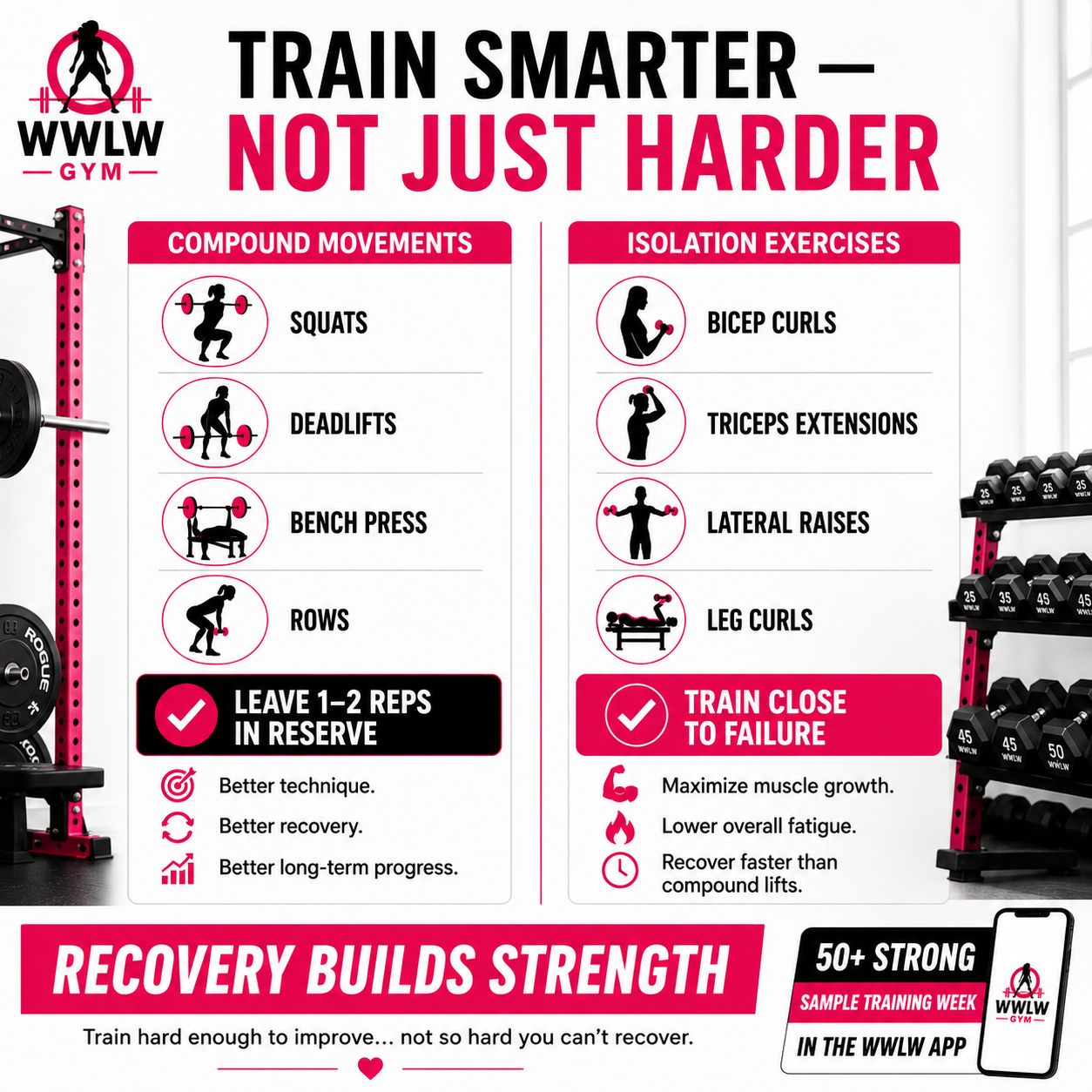
If you remember only one lesson from this article, let it be this:
Train smarter—not just harder.
One of the biggest misconceptions in strength training is believing that every exercise should be trained exactly the same way.
The reality is that your body responds differently to compound movements and isolation exercises. Each serves a different purpose, creates a different level of fatigue, and requires a different recovery strategy.
Understanding that difference allows you to train harder where it makes sense while protecting your body where it matters most.
A Simple Rule to Remember
When planning your workouts, think about the type of exercise you’re performing before deciding how hard to push.
- Compound movements → Leave 1–2 repetitions in reserve.
- Isolation exercises → Train close to failure when appropriate.
- Recovery → Make it part of your training plan—not an afterthought.
This approach allows you to accumulate more quality training over weeks, months, and years instead of constantly digging yourself into a recovery hole.
Remember, progress isn’t determined by how exhausted you feel after today’s workout. It’s determined by whether you can recover, come back stronger, and continue improving next week.
The best training program isn’t the one that leaves you exhausted…
It’s the one you can recover from and repeat consistently.
The Bottom Line: Stronger for Life
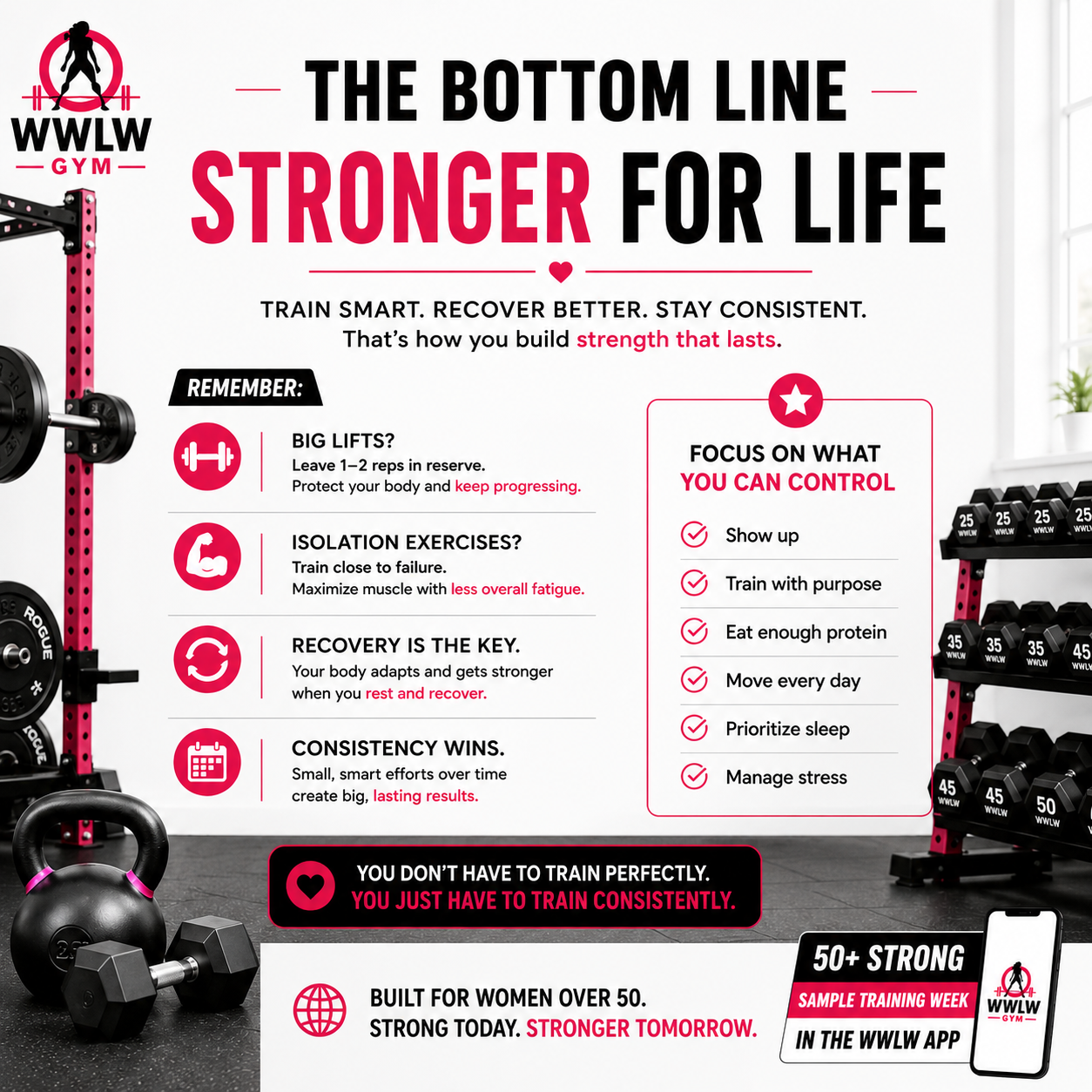
If you’ve made it this far, you’ve probably realized that strength training isn’t about finding one magic rule that applies to every exercise.
It’s about understanding when to push hard, when to back off, and how to recover well enough to keep making progress.
That’s exactly why I encourage women over 50 to think beyond a single workout and instead focus on building habits they can maintain for years.
Remember These Four Principles
- Big lifts: Leave one or two repetitions in reserve.
- Isolation exercises: Train closer to failure when appropriate.
- Recovery: Your body adapts and becomes stronger while you recover—not while you’re training.
- Consistency: Showing up week after week will always outperform occasional all-out workouts.
Remember, the strongest women I know aren’t the ones who destroy themselves in every workout.
They’re the women who keep showing up.
They train with purpose.
They recover intentionally.
And they stay consistent year after year.
You don’t have to train perfectly.
You simply have to train consistently.
Coach Rob’s Final Thoughts
After coaching women for more than 30 years, I’ve learned something that’s surprisingly simple.
The strongest women aren’t necessarily the ones who train the hardest every single day.
They’re the women who train consistently.
They show up week after week.
They progressively get stronger.
They challenge themselves.
But they also respect recovery.
The Biggest Takeaways
- Training to failure isn’t necessary on every exercise.
- Leave one or two repetitions in reserve on your big compound lifts.
- Push isolation exercises closer to failure while maintaining good technique.
- Recovery becomes increasingly important after 50.
- Consistency will always beat occasional all-out workouts.
- Think long-term—not just about today’s workout.
One of the biggest mistakes I see is treating every workout like a fitness test.
Not every session needs to produce a personal record.
A productive workout should leave you feeling challenged—not destroyed.
Strength training doesn’t end when you leave the gym.
Quality sleep, enough protein, proper nutrition, hydration, and recovery are all part of the training process.
The goal isn’t to survive today’s workout.
The goal is to build a body that’s stronger next year than it is today.
If you train with that mindset, you’ll continue building strength, muscle, confidence, and independence long after many people believe it’s possible.
Ready to Take the Next Step?
Reading is a great place to start.
Taking action is where your results begin.
Whether you’re looking to try your first structured strength program or you’re ready to begin training inside the Women Who Lift Weights App, I’ve got something for you.
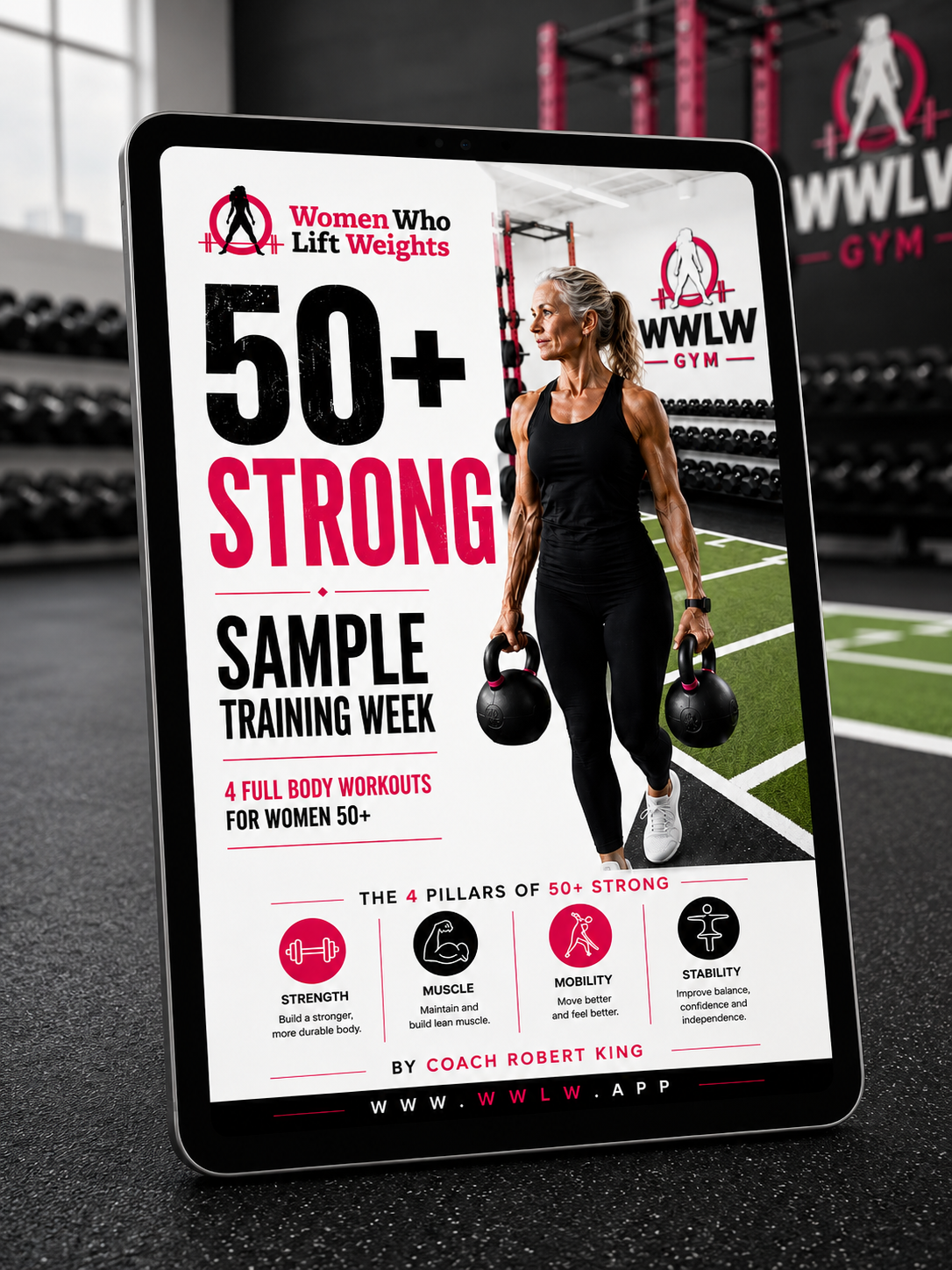
Try a FREE Sample Training Week
Experience exactly how I coach women over 50 to build strength, improve mobility, and gain confidence with every workout.
- ✔ 4 Full Strength Workouts
- ✔ Beginner Friendly
- ✔ Dumbbell Based
- ✔ Completely Free
Continue Inside the WWLW App
Ready for more than just one week?
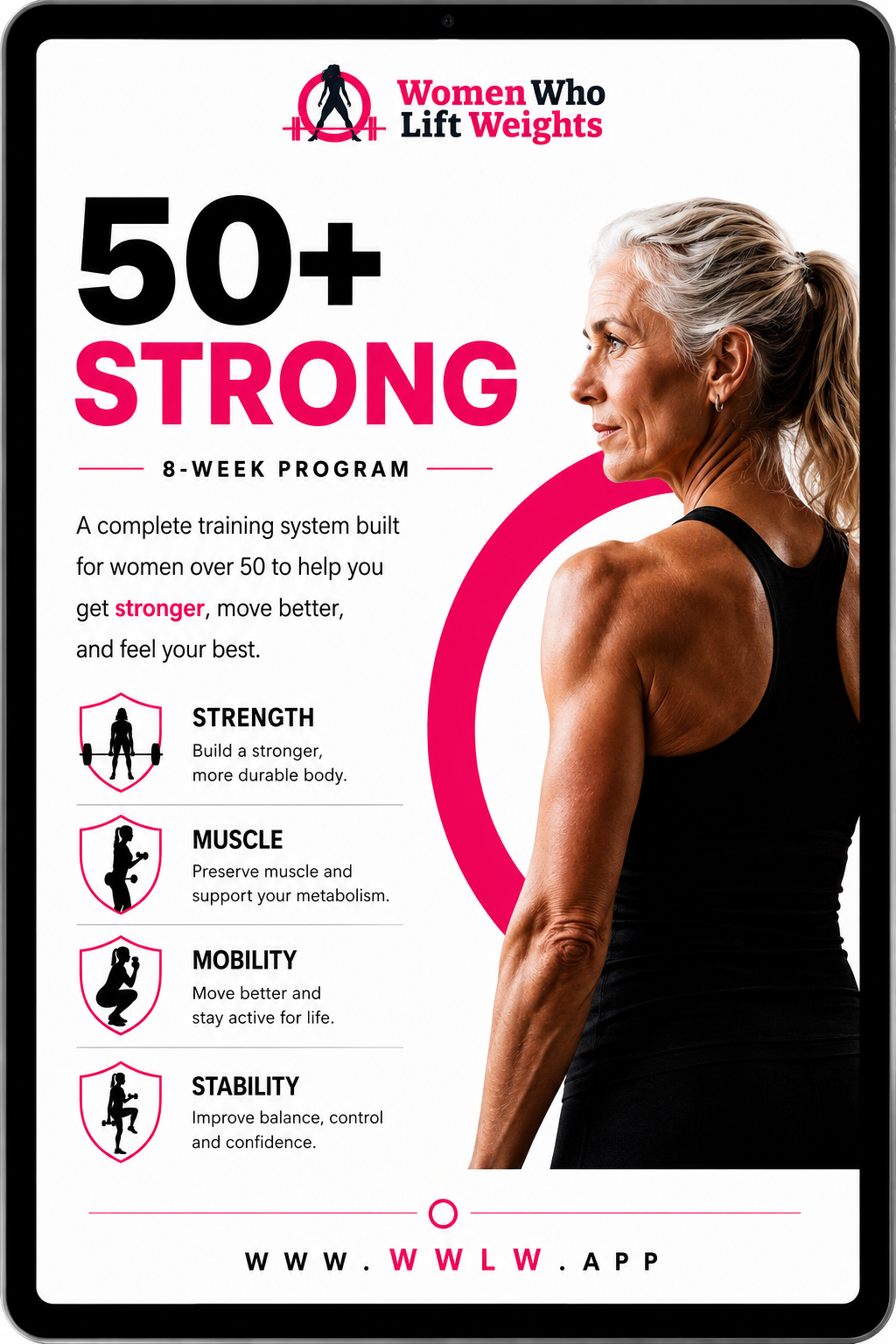
50+ STRONG is one of the featured programs inside the Women Who Lift Weights App—designed specifically to help women over 50 build strength, maintain muscle, improve mobility, and stay active for life.
- ✔ Complete 8-Week Program
- ✔ Strength • Muscle • Mobility • Stability
- ✔ Exercise Video Library
- ✔ Workout Tracking
- ✔ Hundreds of Additional Workouts