Can You Still Build Muscle After 50?
Can you still build muscle after 50?
Absolutely.
One of the biggest mistakes women make as they get older is assuming strength training needs to become easier, lighter, or less challenging.
Your body doesn’t suddenly stop responding to resistance training because you turned 50. It still responds to progressive overload, adequate nutrition, recovery and consistency.
The approach may become smarter — but the basic principles haven’t changed.
Yes — You Can Build Muscle After 50
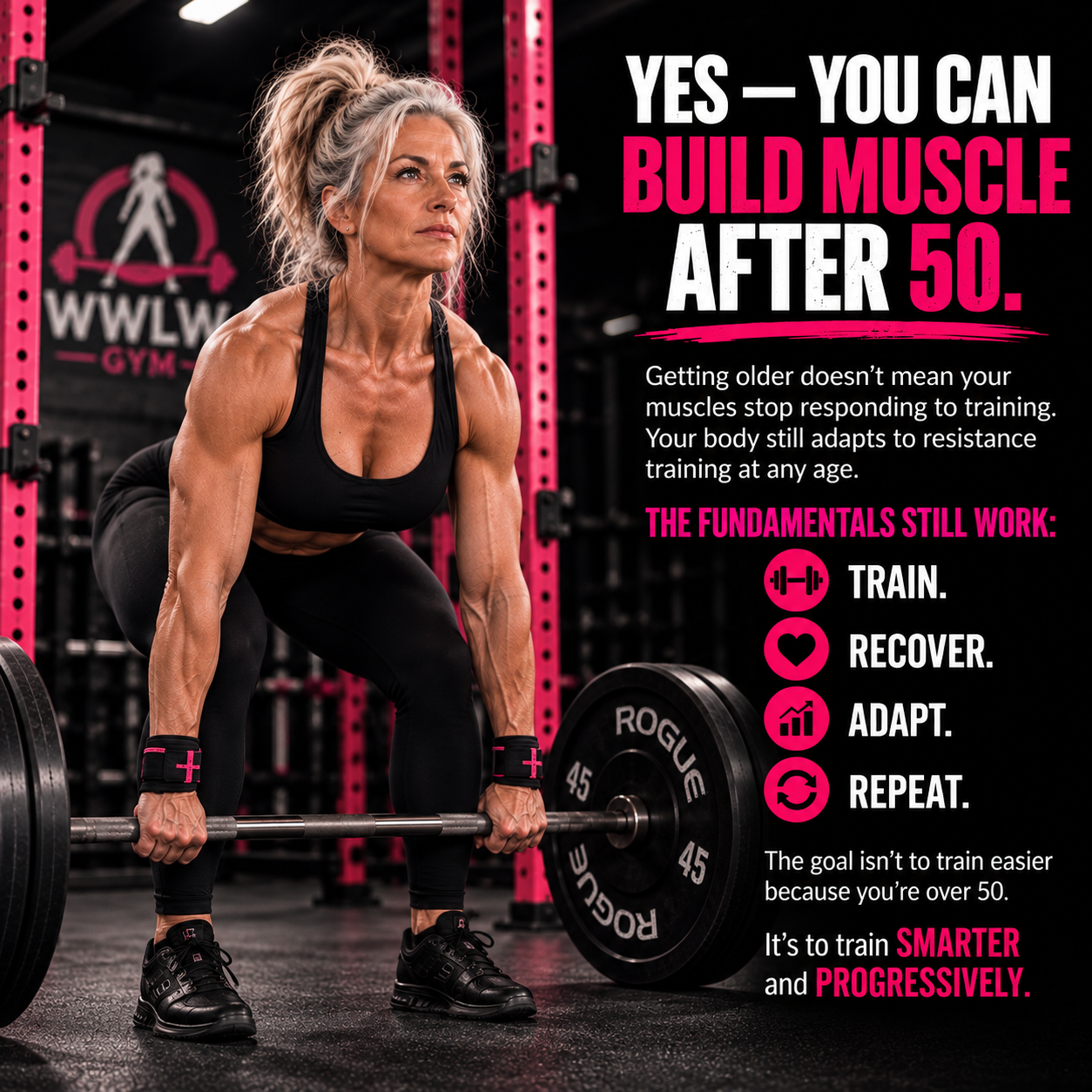
Getting older doesn’t mean your muscles stop responding to training. Your body still adapts to resistance training at any age — the same way it did at 30, or 20.
The fundamentals still work: you train, you recover, you adapt, and you repeat. That cycle doesn’t expire on a birthday. What changes isn’t whether your body can build muscle — it’s how deliberately you have to approach the process to keep it working in your favor.
The goal isn’t to train easier because you’re over 50. It’s to train smarter and progressively.
Keep Challenging Your Muscles
Progress doesn’t always mean adding more weight.
It can mean another rep, an extra set, better technique, greater range of motion, or more control through the lift. If you’ve been doing the same weight, same reps, same sets for months without any of those things changing, your muscles have no reason to adapt further. Small, steady increases in demand — in any of those areas — are what keep the stimulus alive.
Eat Enough Protein
Training provides the stimulus. Your body still needs the building blocks to repair tissue and build muscle.
Think of a hard training session as sending your body a request to rebuild stronger. If you’re not giving it enough protein to work with, that request goes unanswered — no matter how hard you trained. This becomes even more important after 50, when your body needs a bit more protein to build and maintain the same amount of muscle it once did with less.
Stop Chronically Under-Fueling
If you’re constantly aggressively dieting while trying to train hard, you’re making recovery and muscle growth unnecessarily difficult.
You can’t out-train a calorie deficit that’s too steep and still expect to build muscle at the same time. Trying to do both — train hard and eat very little — usually means you get neither the fat loss nor the strength gains you’re after. Fuel the effort you’re putting in.
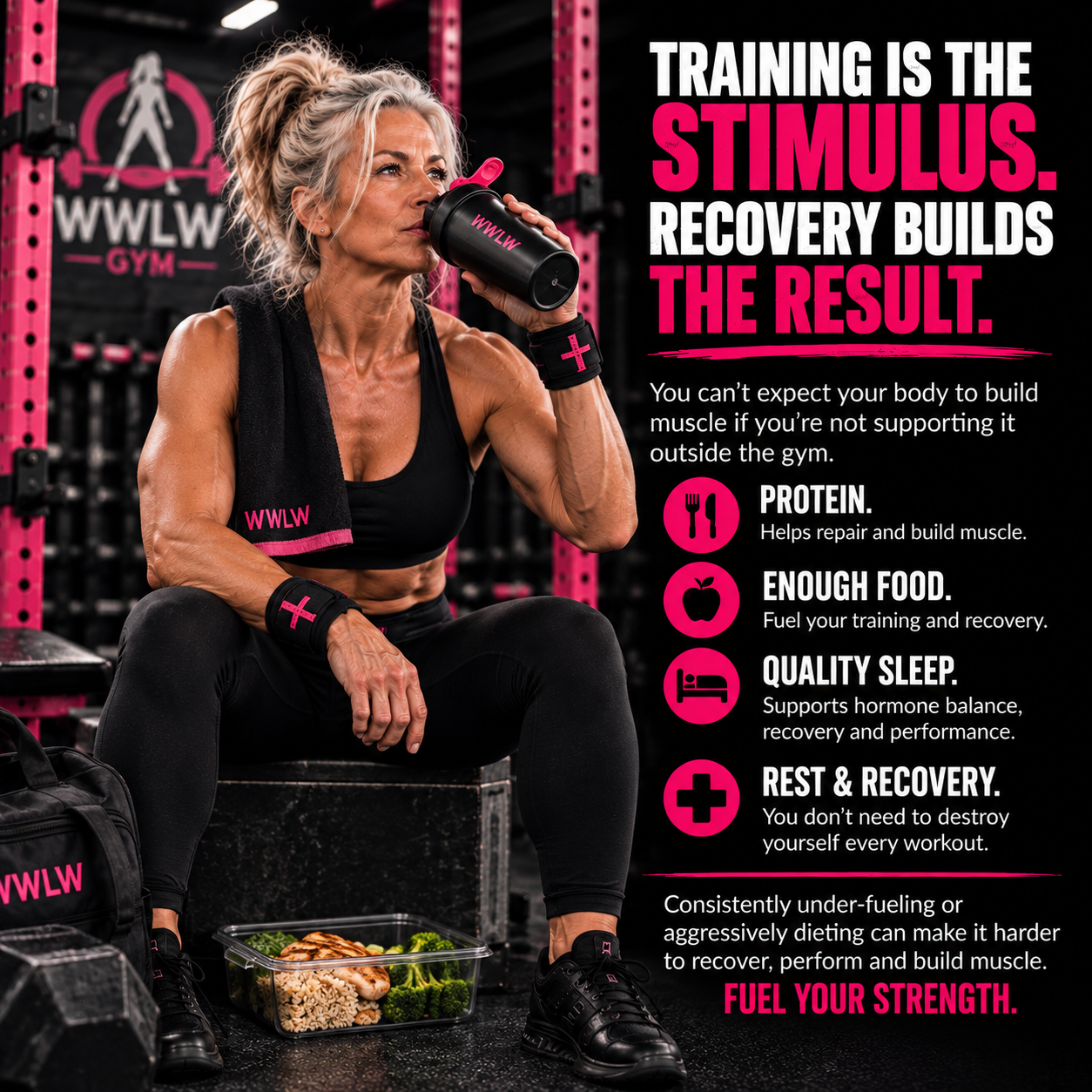
Training Is The Stimulus. Recovery Builds The Result.
You can’t expect your body to build muscle if you’re not supporting it outside the gym.
Protein helps repair and build muscle. Enough food fuels your training and your recovery. Quality sleep supports hormone balance, recovery, and performance. And rest and recovery days give your body the chance to actually adapt to the work you’ve done. Consistently under-fueling or aggressively dieting can make it harder to recover, perform, and build muscle — no matter how hard your training sessions are.
Take Recovery Seriously
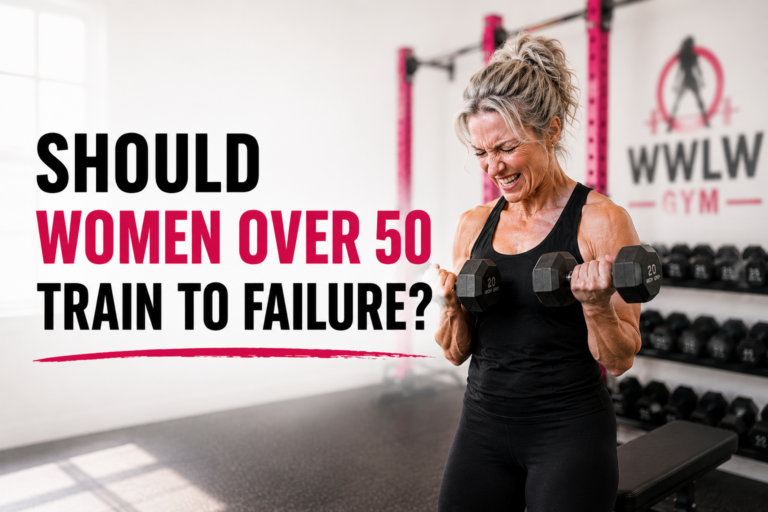
You don’t need to destroy yourself every workout.
Quality training followed by adequate sleep and recovery gives your body the opportunity to adapt. Muscle isn’t built in the gym — it’s built in the recovery between sessions. Chasing exhaustion in every workout doesn’t speed that process up; if anything, it gets in the way of it.
Consistency Beats Extremes
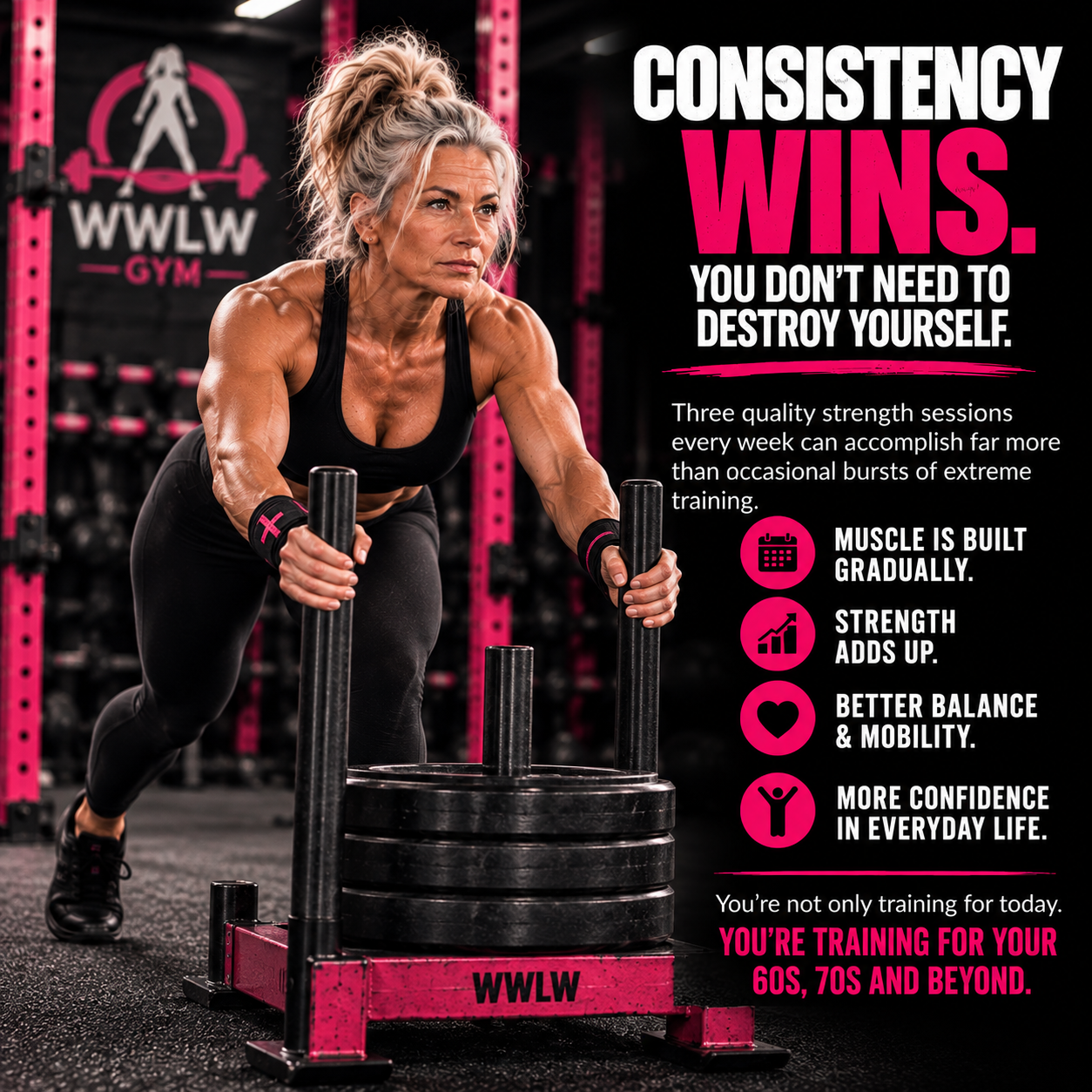
Three quality strength sessions every week will usually take you much further than occasionally crushing yourself in the gym and then disappearing for two weeks.
Muscle is built gradually, and strength adds up over time — not in a single brutal session, but across weeks and months of showing up. A sustainable rhythm of training beats an unsustainable burst of intensity almost every time.
What You’re Actually Training For
And remember what you’re actually training for.
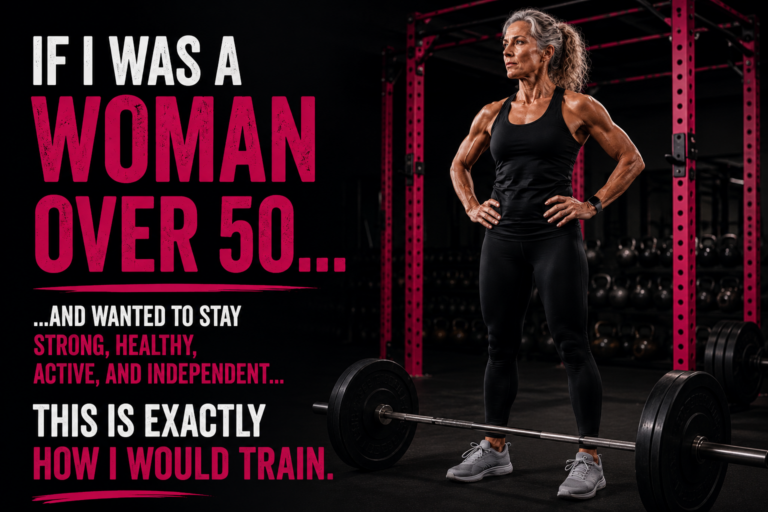
You’re not just building muscle for how you look today. You’re building strength for your 60s, 70s, and beyond. That’s the real return on every session you put in now — it compounds over decades, not weeks.
- ✔ More muscle
- ✔ Stronger bones
- ✔ Better balance
- ✔ Greater confidence
- ✔ More independence
Getting older isn’t a reason to stop challenging your body. It’s a reason to keep it strong.
Your body doesn’t stop responding to strength training after 50 — it just needs you to train smarter, not easier.
Progressive overload, enough protein, real recovery, and consistency are still the fundamentals — at every age.
Ready To Build Real Strength After 50?