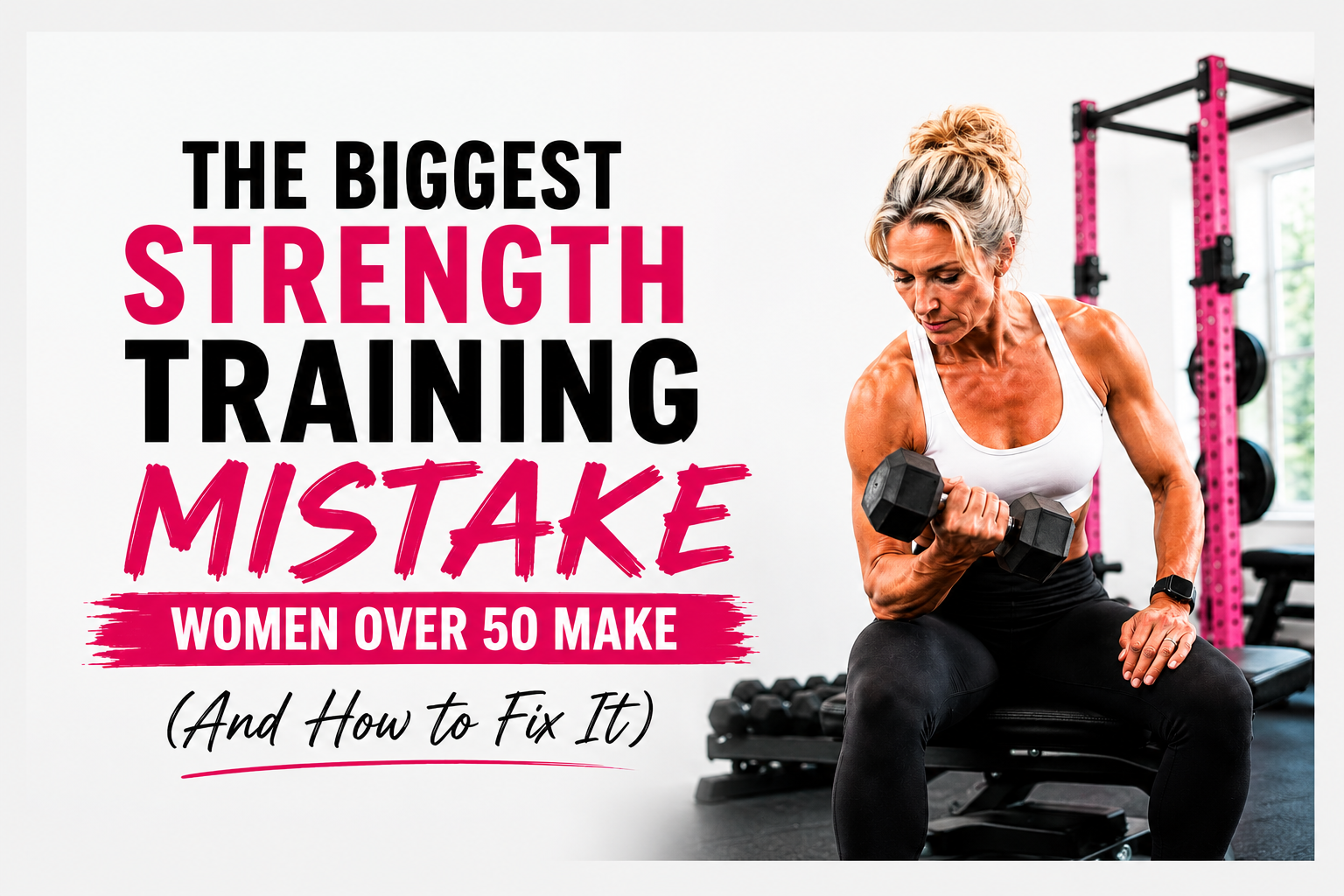
The Biggest Strength Training Mistake Women Over 50 Make (And How to Fix It)
Strength training is one of the best investments you can make in your health after 50—but getting stronger isn’t the whole story.
After coaching thousands of women over the last 30 years, I’ve noticed a pattern that shows up again and again. Many women work incredibly hard in the gym, yet they still struggle with stiffness, poor balance, aches and pains, or feeling less capable than they’d like in everyday life.
It isn’t because they aren’t trying.
It isn’t because they aren’t lifting weights.
More often than not, it’s because they’re focusing on just one piece of the puzzle.
Strength matters. In fact, it’s one of the most important physical qualities you can build as you get older. But if strength is the only thing your workouts are developing, you’re missing several other qualities that help you move better, feel better, and stay active for years to come.
In this article, I’ll explain the biggest mistake I see women over 50 make in the gym, why it’s so common, and the four essential qualities every woman should include in her training to build a stronger, healthier, and more resilient body.
Why This Mistake Happens
If you’re making this mistake, you’re certainly not alone.
In fact, it’s exactly how most women are taught to train.
Many women over 50 begin lifting weights by following a workout they find online, watching fitness videos on social media, reading a magazine, or downloading a generic workout program.
Those programs often focus on one goal—build strength, build muscle, lose weight, or tone your body. While there’s nothing wrong with those goals, they rarely teach why a workout is designed the way it is or what your body truly needs as you get older.
As a result, it’s easy to believe that a good workout simply means lifting heavier weights, training different body parts throughout the week, or moving from one machine to the next.
After coaching thousands of women over the last 30 years, I’ve learned that the best training programs do much more than help you complete a workout. They help you build the physical qualities that make everyday life easier, safer, and more enjoyable.
That’s where many traditional programs fall short.
They teach exercises.
They don’t always teach movement.
And they rarely teach you how all the pieces fit together to create a stronger, healthier, and more resilient body.
What Your Body Really Needs After 50
One of the biggest misconceptions about strength training is that getting older means lowering your expectations.
After coaching women in their 50s, 60s, and even their 70s, I’ve found the opposite is often true. Many women become stronger than they ever imagined possible once they begin training consistently.
But strength alone isn’t the finish line.
As we get older, our bodies naturally change. We gradually lose muscle mass if we don’t challenge it. Our joints can become stiffer. Balance may decline. Everyday movements that once felt effortless can begin to feel more difficult.
The good news is that many of these changes aren’t simply a part of aging—they’re a response to doing less. The body adapts to the demands we place on it.
That’s why a well-designed strength program should do more than help you lift heavier weights. It should help you build a body that’s prepared for everyday life—one that can move well, stay balanced, recover effectively, and remain strong for years to come.
When you begin looking at your training this way, everything changes. Instead of asking, “What muscles am I working today?”, you begin asking, “What abilities am I improving today?”
That simple shift in thinking can completely change how you approach strength training after 50.
Think Beyond Strength
For many women, getting stronger becomes the primary goal after 50—and that’s a fantastic goal to have. Building strength makes everyday tasks easier, boosts confidence, supports bone health, and helps you stay independent as you age.
But after coaching thousands of women over the last 30 years, I’ve learned something important.
The women who continue to feel their best in their 50s, 60s, and beyond aren’t just training to become stronger.
They’re training for the life they want to live.
They want the strength to lift a suitcase into the car. The mobility to comfortably tie their shoes. The stability to confidently walk on uneven ground. And the muscle to keep doing the activities they love for years to come.
Those everyday moments require much more than strength alone.
They require a well-rounded training program that develops four essential physical qualities: Strength, Muscle, Mobility, and Stability.
Think of these as the foundation of effective strength training after 50. Each one plays a different role, but together they help you build a body that’s stronger, moves better, recovers better, and is prepared for the demands of everyday life.
Let’s take a closer look at each one and why they all deserve a place in your training program.
Click the image to shop WWLW Supplements.
1. Strength: Building the Foundation
Strength is where it all begins.
After coaching thousands of women over the last 30 years, I’ve seen firsthand how life-changing strength training can be. I’ve watched women perform their first push-up, deadlift more than their bodyweight, compete in their first powerlifting meet, and accomplish things they never thought were possible.
But some of the biggest victories don’t happen on a lifting platform.
They happen in everyday life.
I’ve had women tell me they can finally carry all the groceries into the house in one trip. Others tell me they can get up off the floor without needing help, lift a heavy suitcase into the trunk of the car, or keep up with their grandchildren without feeling exhausted.
That’s the true value of strength.
It’s not about impressing anyone in the gym or chasing bigger numbers on the barbell. It’s about making everyday life easier, safer, and more enjoyable.
Strength is your body’s ability to produce force. Every time you squat down to pick something up, push a heavy door open, carry shopping bags, climb a flight of stairs, or lift a grandchild into your arms, you’re relying on strength.
The stronger you become, the more confident you’ll feel doing the activities that matter most to you. That’s why strength is the foundation of everything else we’ll talk about in this article.
Don’t judge your progress by the amount of weight you’re lifting. Judge it by how much easier life is becoming outside the gym. That’s where real strength makes the biggest difference.
Strength Helps You:
- Carry groceries with confidence.
- Lift grandchildren safely.
- Climb stairs with less effort.
- Get up from the floor more easily.
- Support healthy bones.
- Increase confidence in everyday movement.
- Stay active and independent for years to come.
2. Muscle: Protecting Your Body for the Years Ahead
One of the biggest misconceptions I hear from women over 50 is, “I don’t want to build big muscles.”
I understand where that fear comes from, but the reality couldn’t be more different.
When I coach women over 50, we’re not training to build a bodybuilding physique. We’re training to build enough muscle to support the life they want to live.
One of my favorite moments as a coach is watching a woman realize she’s capable of far more than she ever believed possible. That confidence doesn’t come from looking in the mirror—it comes from discovering what her body can do.
Starting in our 30s, we naturally begin to lose muscle mass if we don’t challenge it. Over time, that gradual loss can make everyday activities feel more difficult, reduce strength, slow recovery, and affect how confidently we move through life.
The good news is that strength training can help slow—and often reverse—much of that muscle loss. It doesn’t matter if you’re 50, 60, or even older. Your muscles respond when you give them a reason to.
Muscle isn’t just something you see in the mirror.
It’s what helps you carry groceries without struggling, enjoy long walks without tiring quickly, lift your grandchildren, recover from a busy day, and continue doing the activities you love.
Every pound of muscle you build is an investment in your future. It supports your joints, improves your metabolism, makes everyday movement easier, and helps you stay active and independent as you age.
Don’t think about building muscle for summer. Think about building muscle for the next 20 or 30 years of your life. The muscle you build today will help support the activities you want to enjoy tomorrow.
Building Muscle Helps You:
- Maintain strength as you age.
- Support and protect your joints.
- Improve your metabolism.
- Recover more effectively from everyday activities.
- Feel stronger and more energetic.
- Stay active doing the things you enjoy.
- Maintain your independence for years to come.
3. Mobility: Staying Free to Move
Have you ever caught yourself saying, “I used to be able to do that.”
Maybe it’s bending down to tie your shoes, reaching into the back seat of the car, getting down on the floor to play with your grandchildren, or simply standing up after sitting for a long period of time.
Many people assume these changes are just a normal part of getting older.
In reality, getting older isn’t always the problem.
More often than not, it’s a lack of movement.
Our bodies adapt to how we use them. When we stop moving through full ranges of motion, our joints gradually become stiffer, our muscles become tighter, and everyday movements begin to feel harder than they should.
That’s where mobility becomes so important.
Mobility isn’t about doing the splits or becoming more flexible than everyone else in your yoga class. It’s about giving your body the ability to move comfortably and confidently through the movements you perform every day.
One thing I’ve noticed over the years is that women who continue moving well tend to continue living well. They stay active because movement feels good—not because it hurts.
One of the easiest ways to improve your mobility isn’t by adding another 20 minutes of stretching to your workout—it’s by choosing exercises that naturally improve mobility while you’re building strength.
For example, a deep Goblet Squat develops strength in your legs and core while encouraging your hips, knees, and ankles to move through a full range of motion. Compare that to a Leg Press, where the machine controls the movement and your body doesn’t have to move as naturally.
The same idea applies to your upper body. A Dumbbell Bench Press or Incline Dumbbell Press allows your shoulders to move more freely than many chest press machines, helping you build strength while maintaining healthy shoulder mobility.
Machines absolutely have their place in a well-designed program. But whenever it’s appropriate, choosing free-weight exercises that allow your body to move naturally can help you develop strength, mobility, muscle, and stability—all at the same time.
Improving Mobility Helps You:
- Move through everyday activities with greater ease.
- Reduce feelings of stiffness.
- Improve exercise technique.
- Reach, squat, bend, and rotate more comfortably.
- Support healthier joints.
- Stay active doing the activities you enjoy.
- Move with greater confidence every day.
4. Stability: The Missing Piece for Many Women Over 50
Have you ever stepped off a curb and felt a little unsteady?
Or lost your balance for a split second while putting on your shoes?
Maybe you’ve walked across an icy parking lot a little more cautiously than you used to.
Those small moments may not seem important, but they tell us something.
Your body isn’t just relying on strength—it also relies on stability.
Stability is your body’s ability to control movement. It allows your muscles, joints, and core to work together so you can move with confidence instead of hesitation.
One thing I’ve learned over the years is that stability isn’t something most people think about until they begin to lose it.
The good news is that stability can be trained, just like strength and muscle.
Simple exercises that challenge your balance, coordination, and core control help your body react more efficiently during everyday movements. Whether you’re stepping over a curb, carrying groceries, walking on uneven ground, or reaching into a high cupboard, better stability helps you move with greater confidence.
One of my favourite ways to build stability is to include exercises that require your body to resist movement instead of simply creating it. Farmer’s Carries, Suitcase Marches, Single-Leg Balance exercises, and Dead Bugs teach your body to stay strong and stable while moving through everyday life.
You don’t need dozens of balance drills. Including just a few stability-focused exercises at the end of your workouts can make a tremendous difference over time.
Improving Stability Helps You:
- Improve balance and coordination.
- Build a stronger, more stable core.
- Move with greater confidence.
- Reduce the risk of falls.
- Improve control during everyday activities.
- Support healthier movement patterns.
- Stay active and independent for years to come.
Bringing It All Together
If there’s one message I hope you take away from this article, it’s this:
Don’t just train to get stronger. Train for the life you want to live.
Strength is incredibly important, but it’s only one piece of the puzzle.
When you combine strength with muscle, mobility, and stability, your workouts become more than just exercise. They become an investment in your future.
Think about the life you want to be living 10, 20, or even 30 years from now.
Do you want to travel without worrying about whether you can lift your suitcase into the overhead compartment?
Do you want to hike with friends, play with your grandchildren, carry groceries with confidence, and get down on the floor knowing you can get back up again?
Those aren’t just fitness goals.
They’re life goals.
The amazing thing is that every workout is an opportunity to build toward that future.
Every squat makes it easier to get out of a chair.
Every row helps you carry and pull with more confidence.
Every mobility exercise helps you move with greater freedom.
Every stability exercise builds confidence in the way you move.
Over time, those small improvements add up to something much bigger.
A stronger body.
More confidence.
Greater independence.
And the freedom to keep doing the things you love for many years to come.
Continue Your Strength Journey
I hope this article has helped you think about strength training a little differently. Remember, the goal isn’t simply to get stronger—it’s to build a body that helps you stay active, confident, and independent for years to come. To help you get started, I’ve put together two free resources that expand on everything you’ve learned in this article.
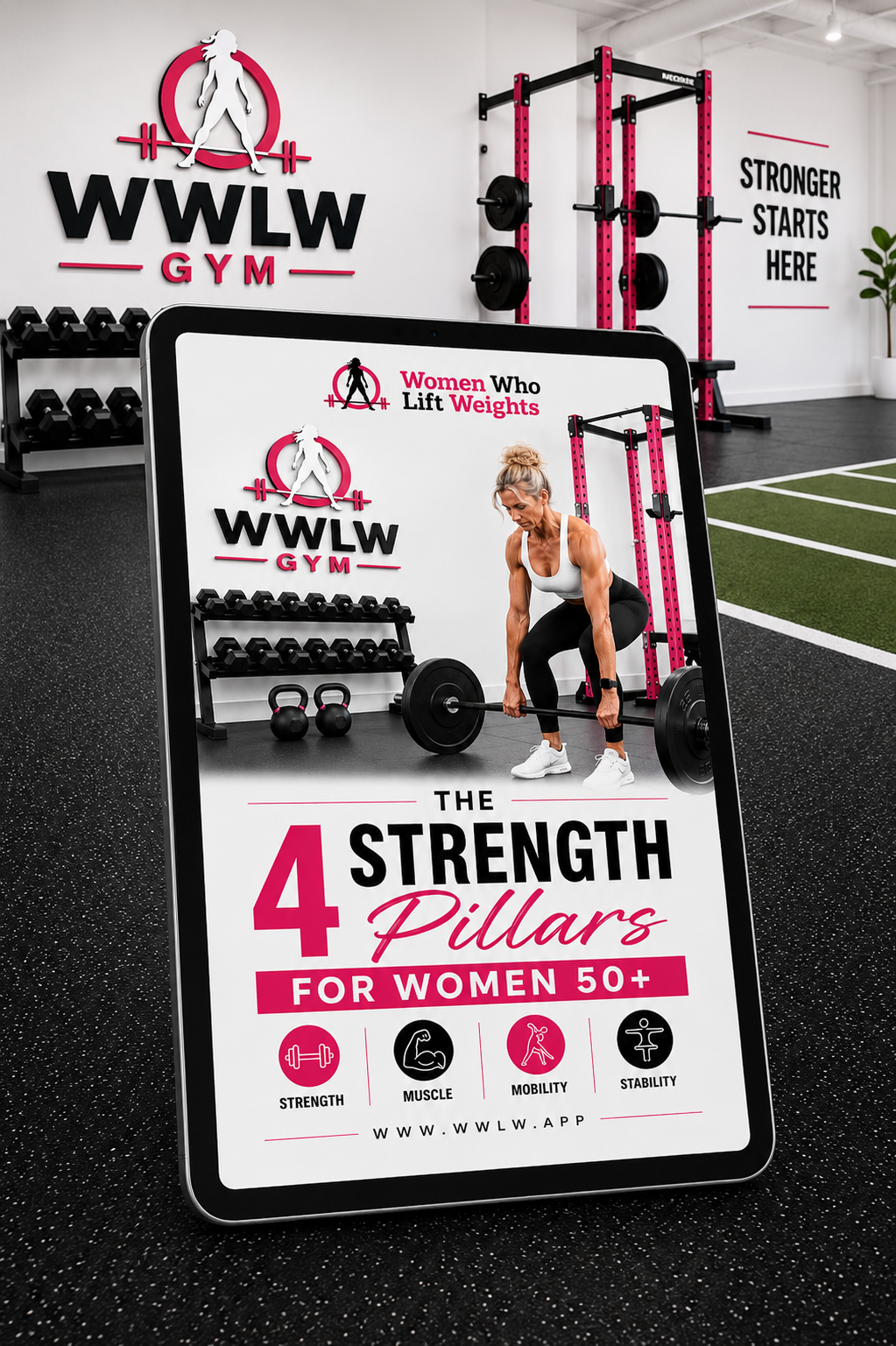
📘 FREE Guide
The 4 Strength Pillars for Women Over 50
Discover how Strength, Muscle, Mobility, and Stability work together to help you build a stronger, healthier, and more capable body after 50.
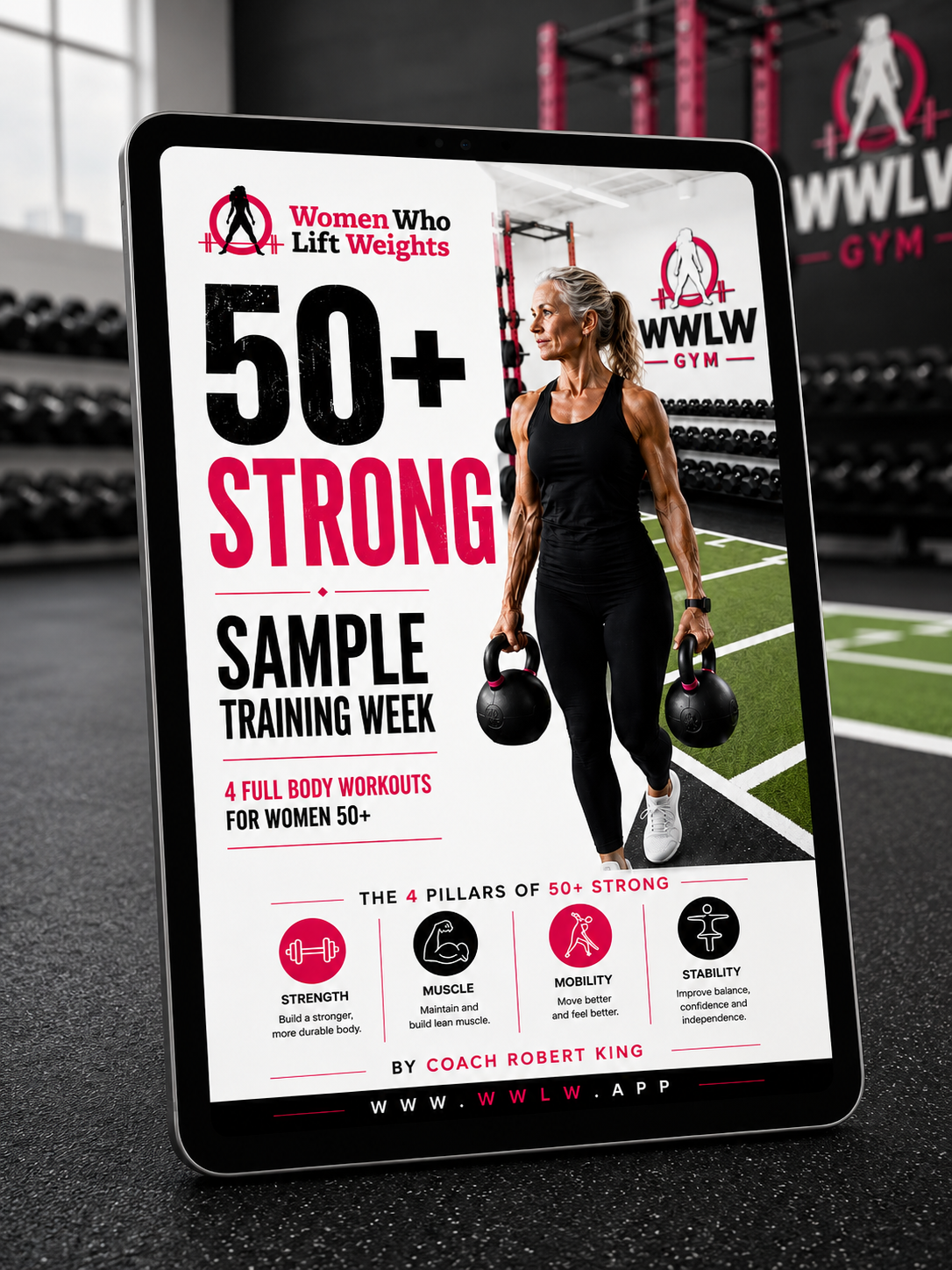
💪 FREE Sample Week
50+ STRONG Sample Training Week
Experience four professionally designed full-body workouts built around the same training philosophy you’ve just learned in this article. See exactly how Strength, Muscle, Mobility, and Stability work together in a balanced training program.
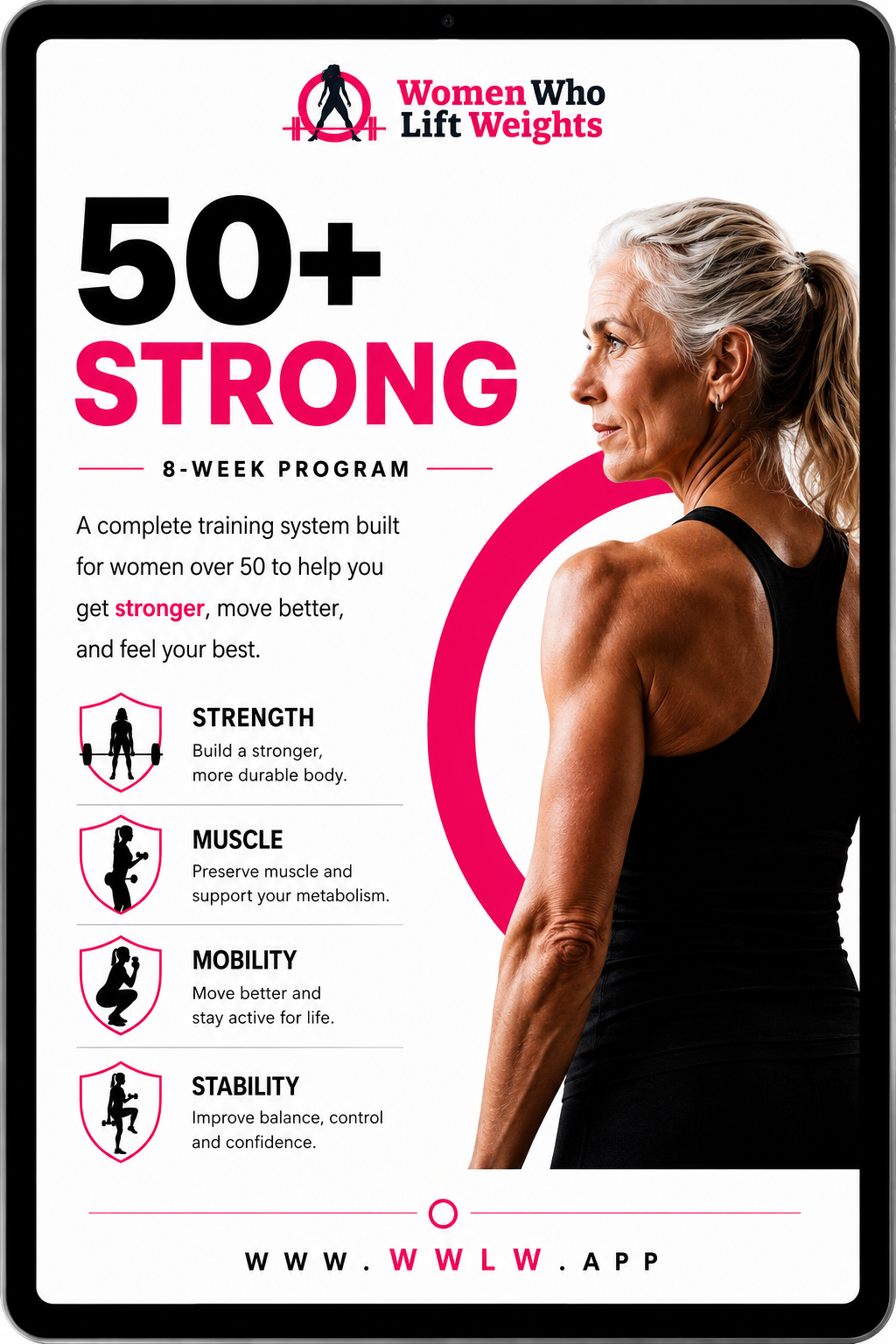
TAKE THE NEXT STEP
Try 50+ STRONG
Inside the Women Who Lift Weights App
If this article changed the way you think about strength training, imagine what eight weeks of following a professionally designed program can do.
The 50+ STRONG Program combines everything you’ve learned in this article into one complete system. Every workout is designed around the four essential qualities every woman over 50 should develop:
Whether you’re just getting started or you’ve been lifting for years, 50+ STRONG gives you the structure, coaching, and confidence to become stronger and stay active for life.
Explore 50+ STRONG →