HOW THE WWLW FULL-BODY FAT LOSS SYSTEM WORKS
How The WWLW Full-Body Fat Loss System Works
Fat Loss

How The WWLW Full-Body Fat Loss Training System Works

The structure behind our full-body fat-loss workouts.

Most fat-loss workouts are built around one idea: burn as many calories as possible in the time you have. Ours isn’t. This is about how we train for fat loss while still prioritizing strength and muscle — because the goal was never just to make you tired. It’s to help you lose body fat, get stronger, and keep the muscle you’ve worked hard to build.

Here’s the actual structure behind it, piece by piece.

Pair Upper + Lower Body Movements
1

Pair Upper + Lower Body Movements

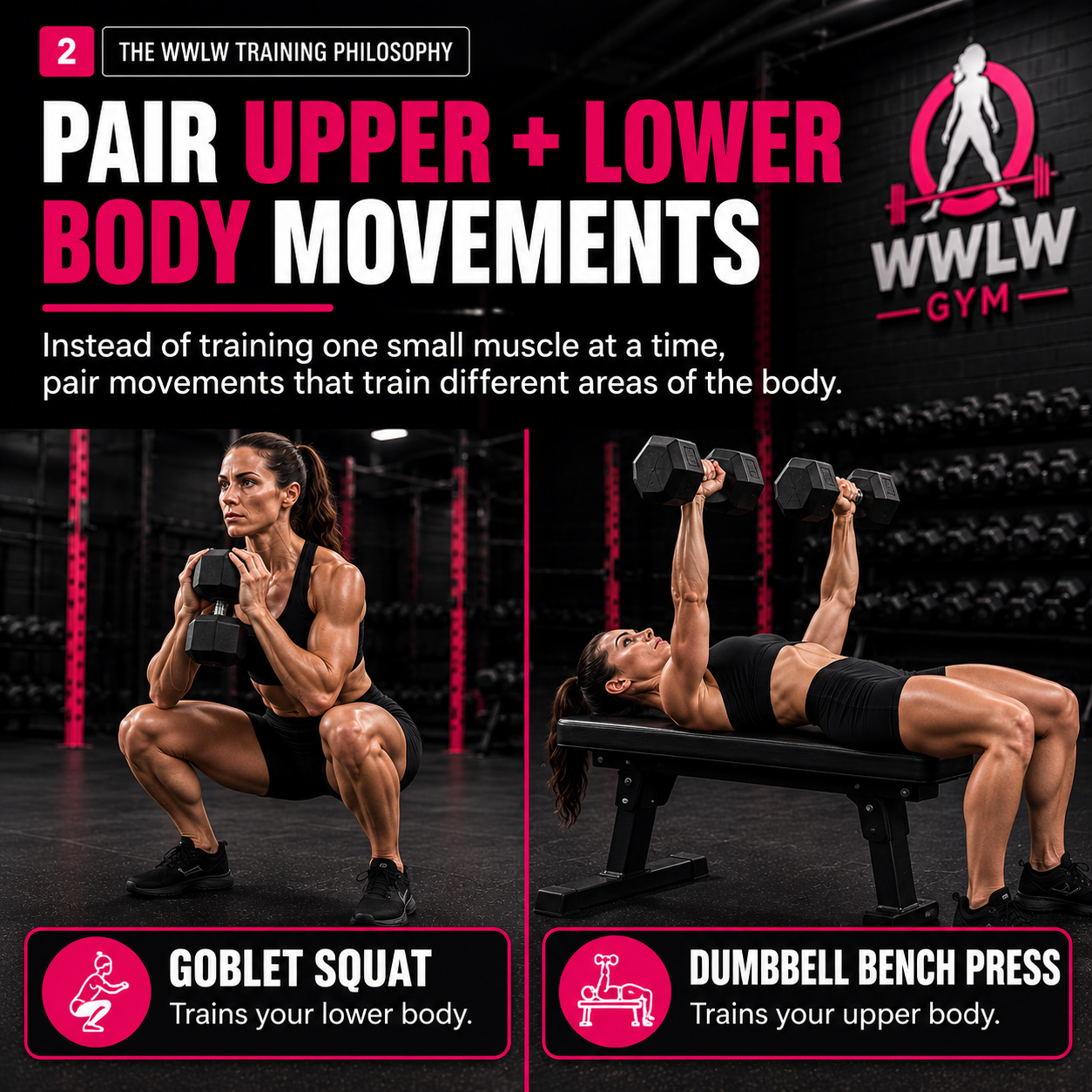
Instead of training one small muscle at a time, we pair movements that train different areas of the body. A goblet squat paired with a dumbbell press. A Romanian deadlift paired with a dumbbell row.

This lets one area recover while another works and keeps the workout moving. Your legs are still resting from the squat while your upper body handles the press — so instead of standing around waiting between sets, you’re getting more done in less time, and your heart rate stays elevated throughout.

That’s the real trick to building a fat-loss workout that doesn’t sacrifice strength: it’s not about lighter weights or faster reps, it’s about how the movements are structured together.

Build Around High-Demand Movements
2

Build Around High-Demand Movements

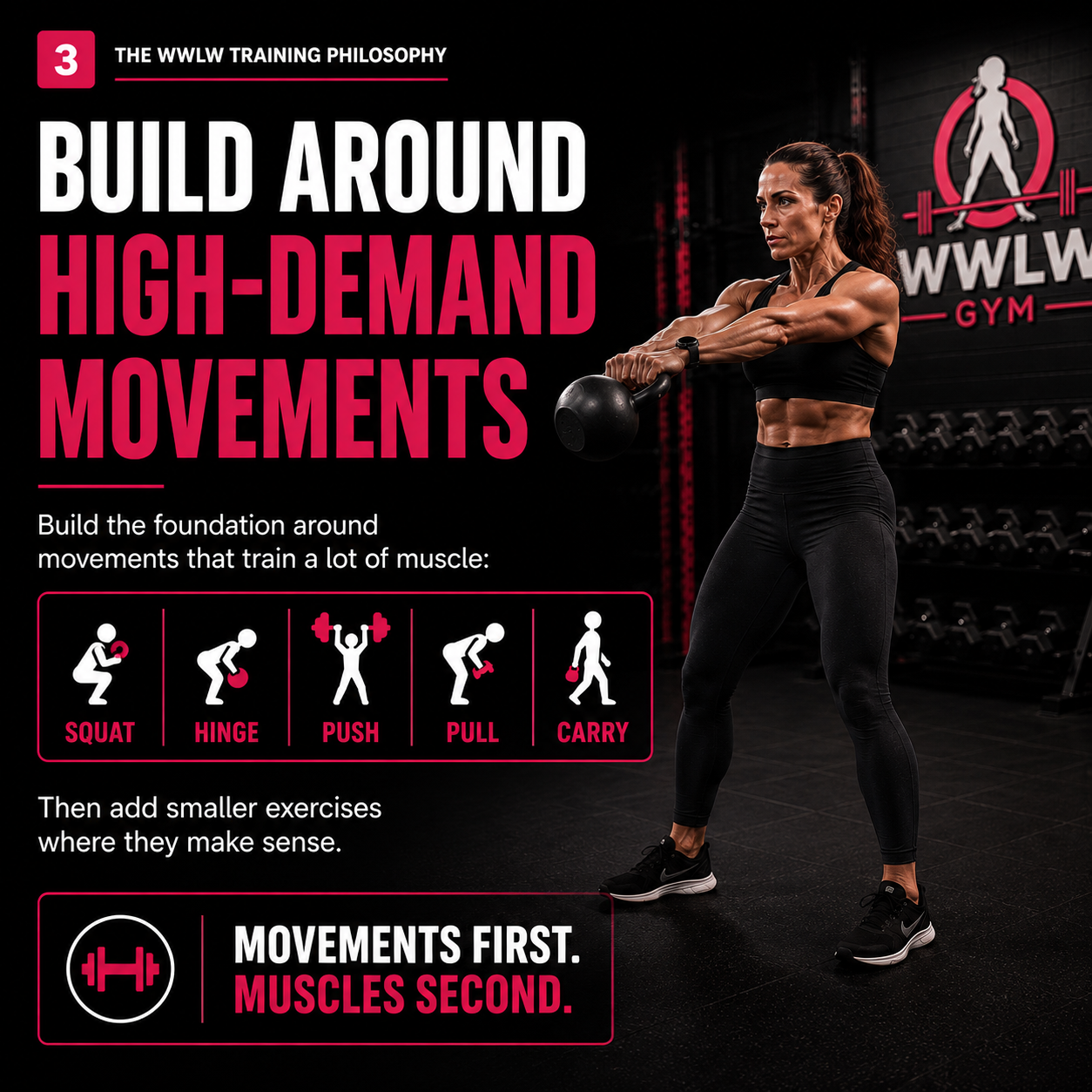
This one’s important enough to earn its own principle. We build the foundation of every fat-loss workout around movements that train a lot of muscle at once: squat, hinge, push, pull, carry. Then we add smaller exercises where they make sense — not the other way around.

A squat asks your quads, glutes, and core to work together in one movement. A single-joint exercise, like a leg extension, asks far less of your body for the same amount of effort. When fat loss is the goal, that difference matters — the movements that recruit the most muscle are also the ones that create the biggest training effect for your time.

This is the same idea behind our training philosophy: movements first, muscles second. Master the big patterns, and everything you build on top of them works better.

Strength Training Should Still Feel Like Strength Training
3

Strength Training Should Still Feel Like Strength Training

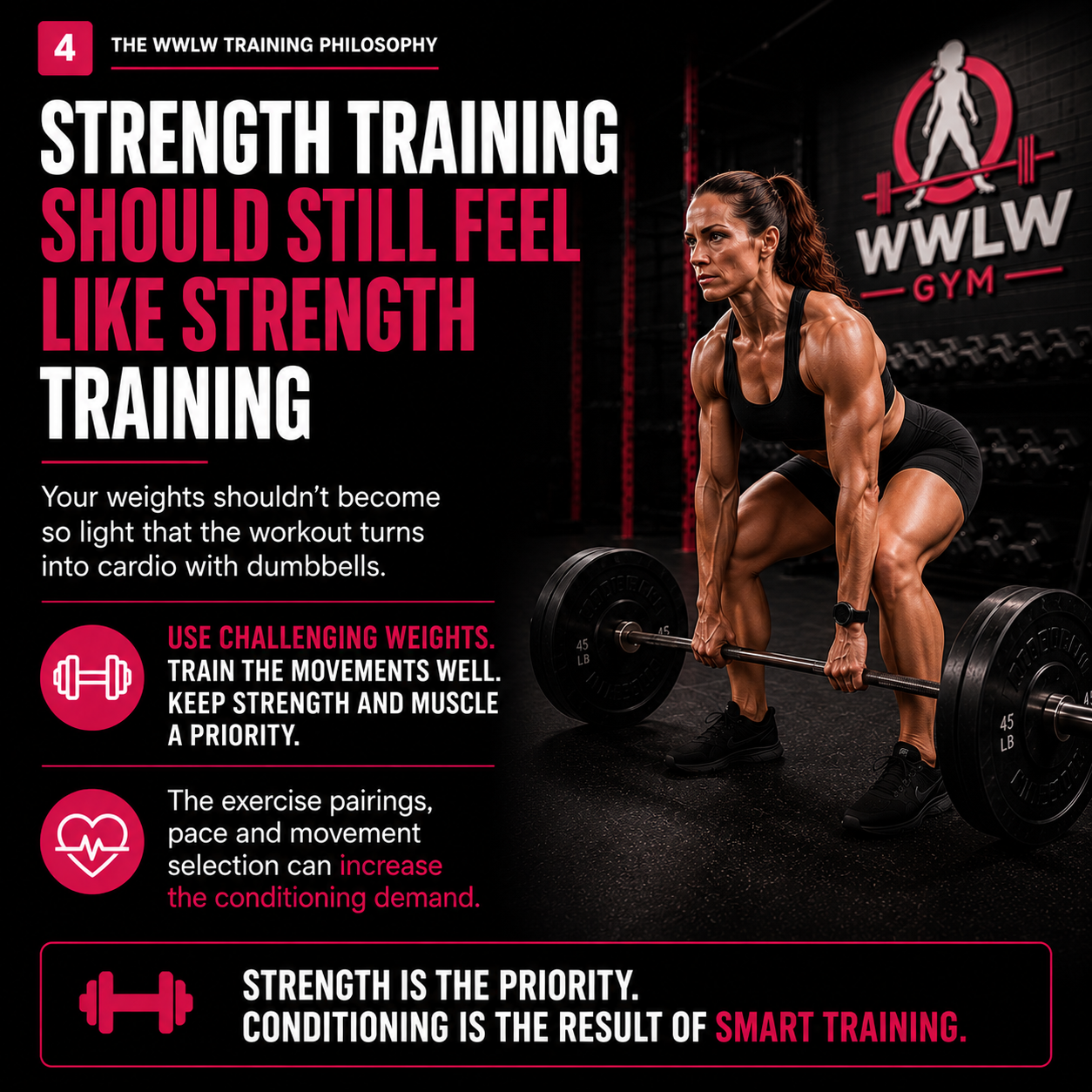
Your weights shouldn’t become so light that the workout turns into cardio with dumbbells. That’s one of the most common mistakes in fat-loss programming — the weights get lighter and lighter until what’s left barely resembles strength training at all.

We do the opposite. Use challenging weights. Train the movements well. Keep strength and muscle a priority — every single session, not just on the days that aren’t focused on fat loss.

So where does the conditioning come from? The exercise pairings, pace, and movement selection increase the conditioning demand — not lighter weights. Strength is the priority. Conditioning is the result of smart training, not a reason to put the heavier dumbbells back on the rack.

You Don't Need To Destroy Yourself To Lose Fat
4

You Don’t Need To Destroy Yourself To Lose Fat

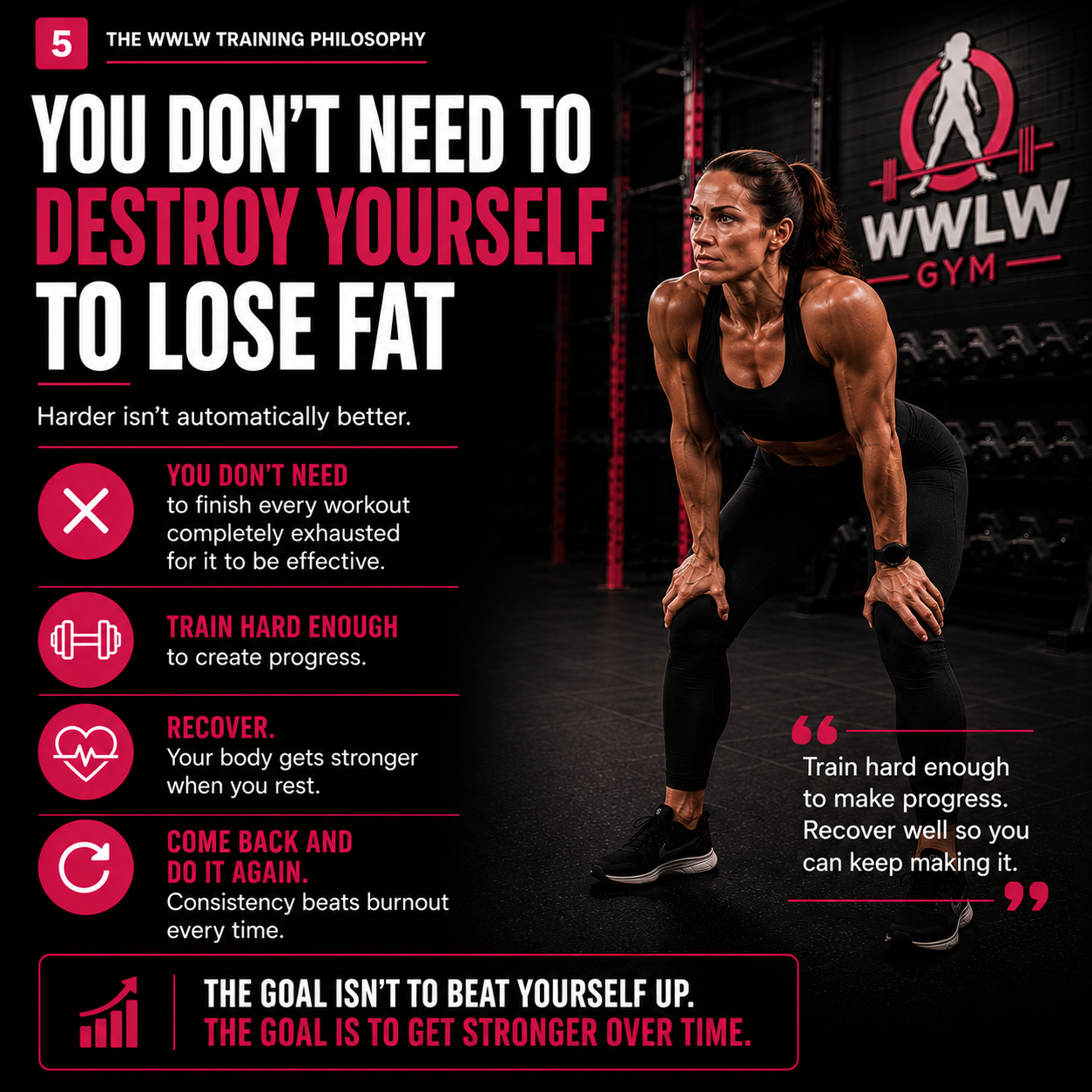
Harder isn’t automatically better. You don’t need to finish every workout completely exhausted for it to be effective — that belief has convinced a lot of women that if they’re not crawling out of the gym, the workout didn’t count.

Train hard enough to create progress. Recover. Come back and do it again. That’s the actual formula. A workout that leaves you too wiped out to train well for the next three days isn’t a better workout — it’s one that’s borrowing progress from next week to pay for this one.

The goal isn’t to beat yourself up. The goal is to get stronger over time — and that requires having enough left in the tank to actually show up for the next session.

Progress Through Consistency
5

Progress Through Consistency

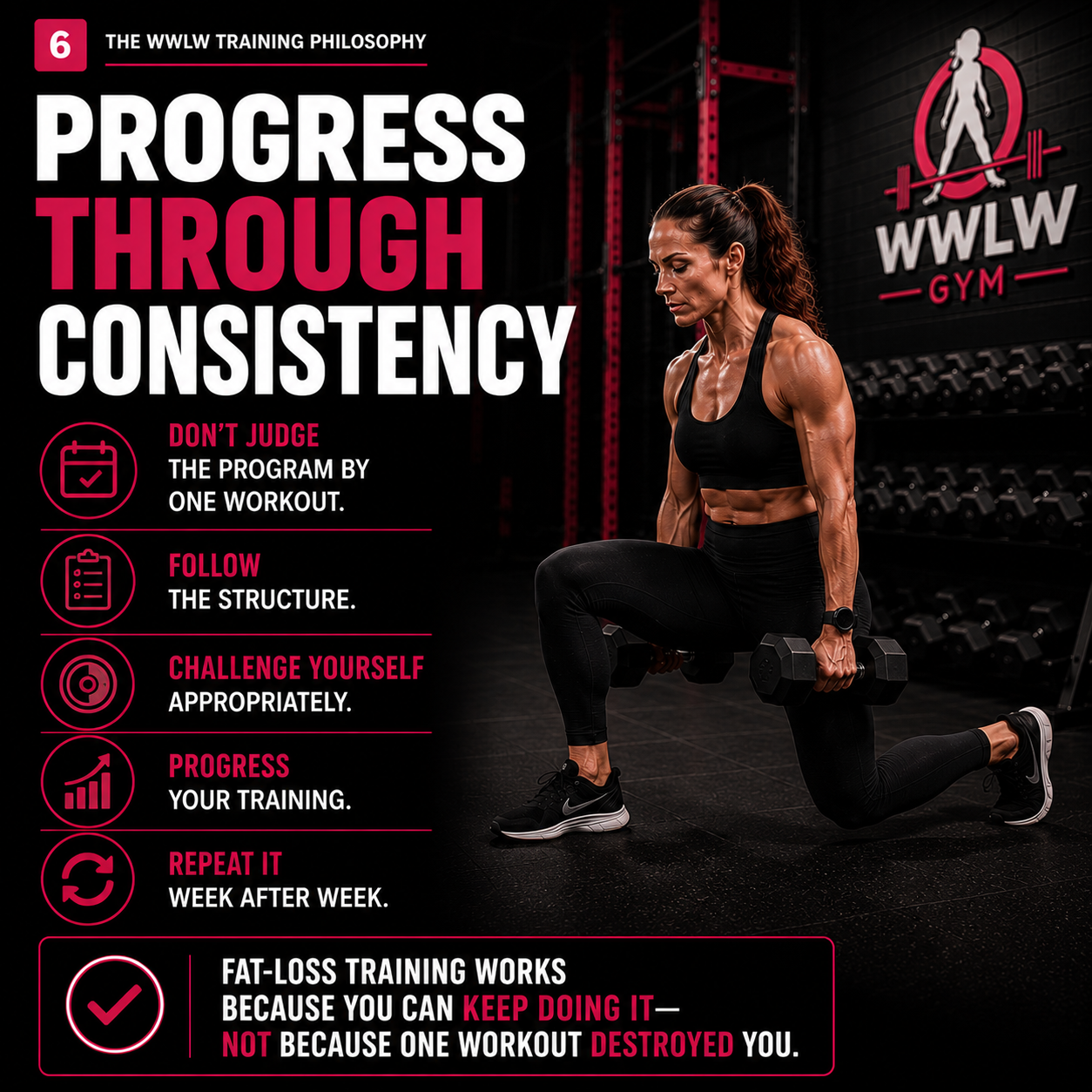
Don’t judge the program by one workout. Follow the structure. Challenge yourself appropriately. Progress your training. Repeat it week after week.

A single session — good or bad — tells you almost nothing about whether a program is working. What tells you is what happens over the next four, eight, twelve weeks, when you keep showing up, keep following the structure, and keep asking a little more of yourself as you’re ready for it.

Fat-loss training works because you can keep doing it — not because one workout destroyed you.

The WWLW Full-Body Fat Loss Formula
🔥

The WWLW Full-Body Fat Loss Formula

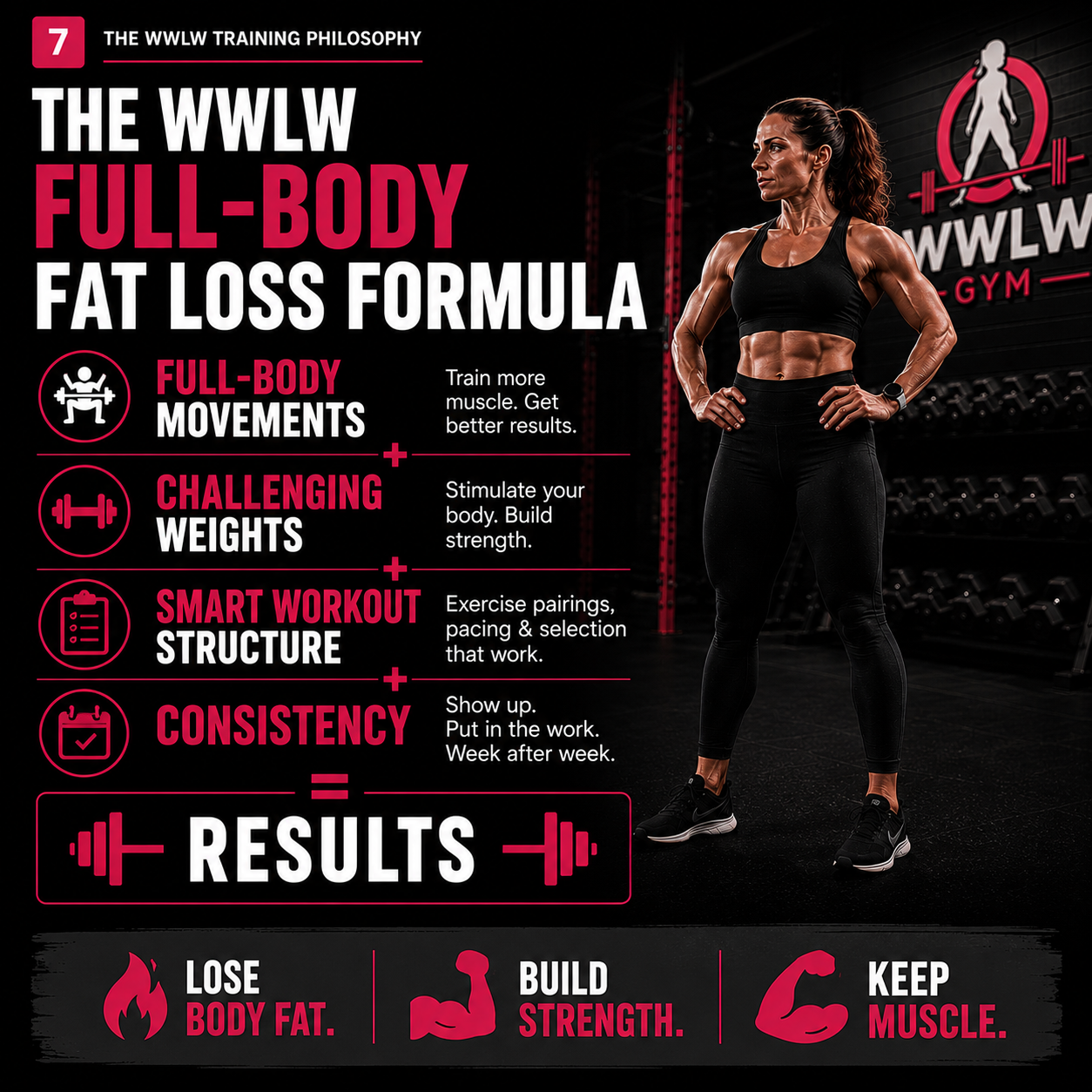
Full-Body Movements + Challenging Weights + Smart Workout Structure + Consistency = Results

Lose body fat. Build strength. Keep muscle. That’s what this system is built to do — workout after workout, week after week.

Resources

Need Help With Fat Loss?

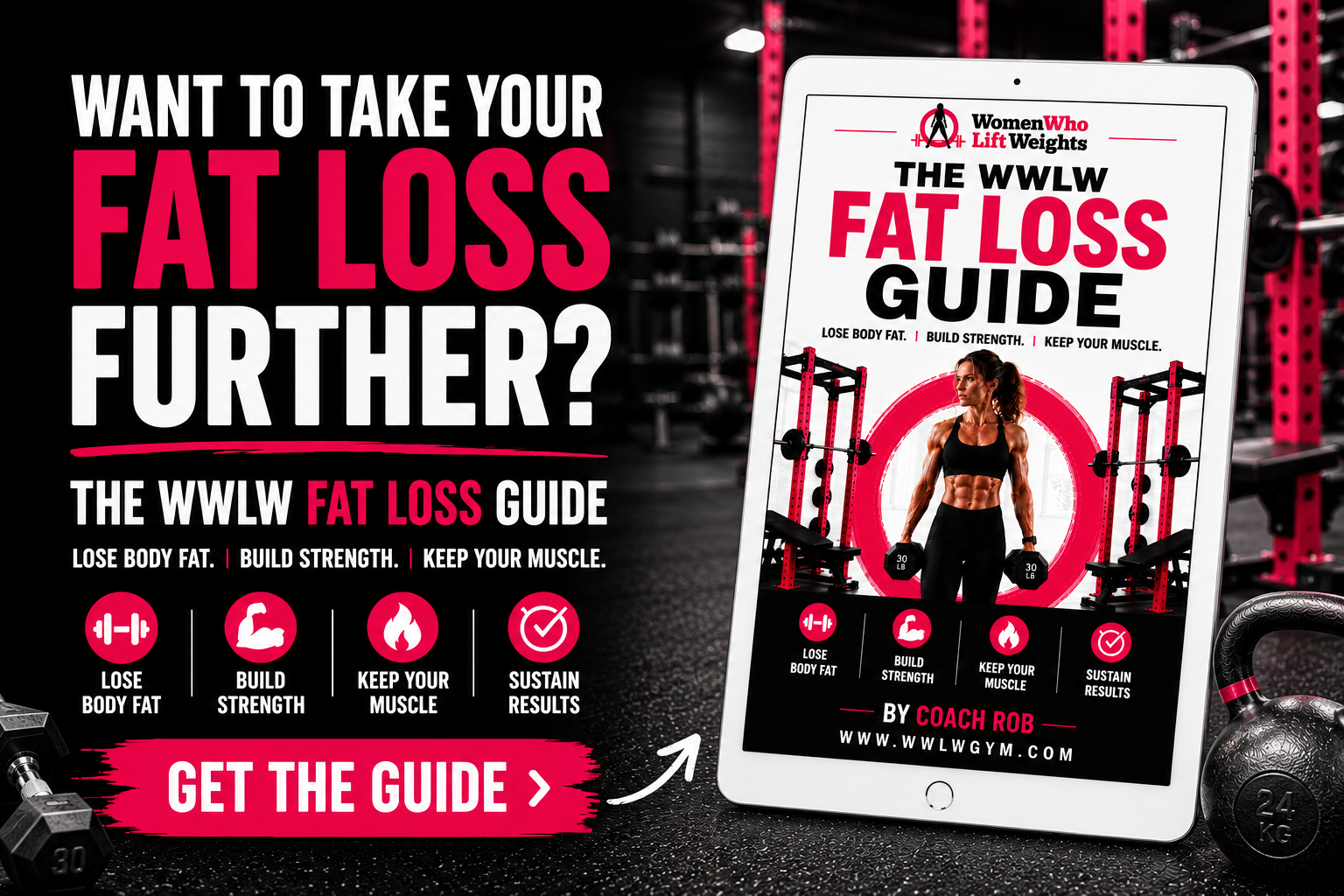
We’ve put together our WWLW Fat Loss Resources, including a FREE Sample Training Week, the Fat Loss Guide, training programs, and more.
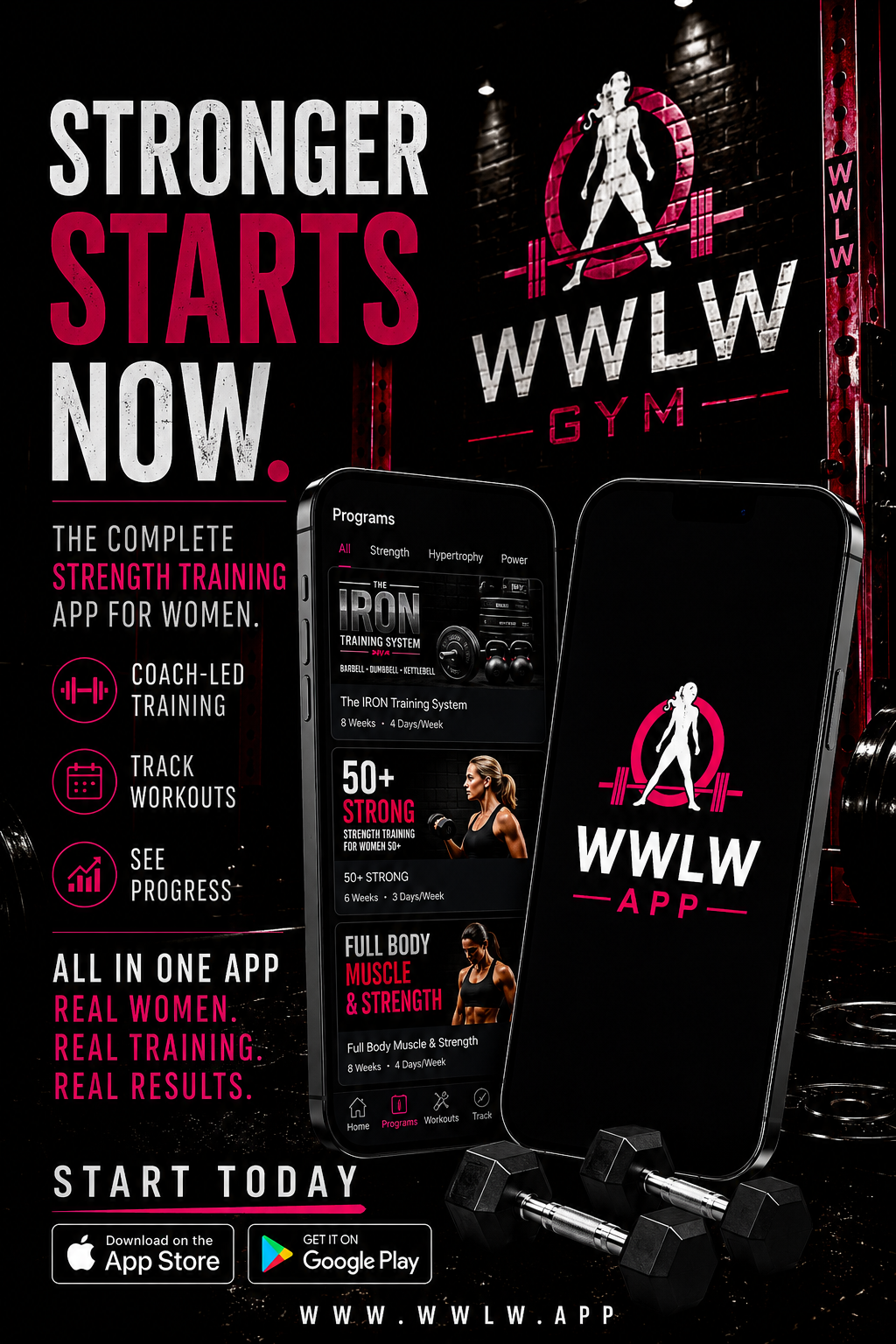
Stronger Starts Here — WWLW App
WWLW App

Stronger Starts Here

Structured programs, tracking, and coaching — everything you need to get stronger, all in one app.

Author

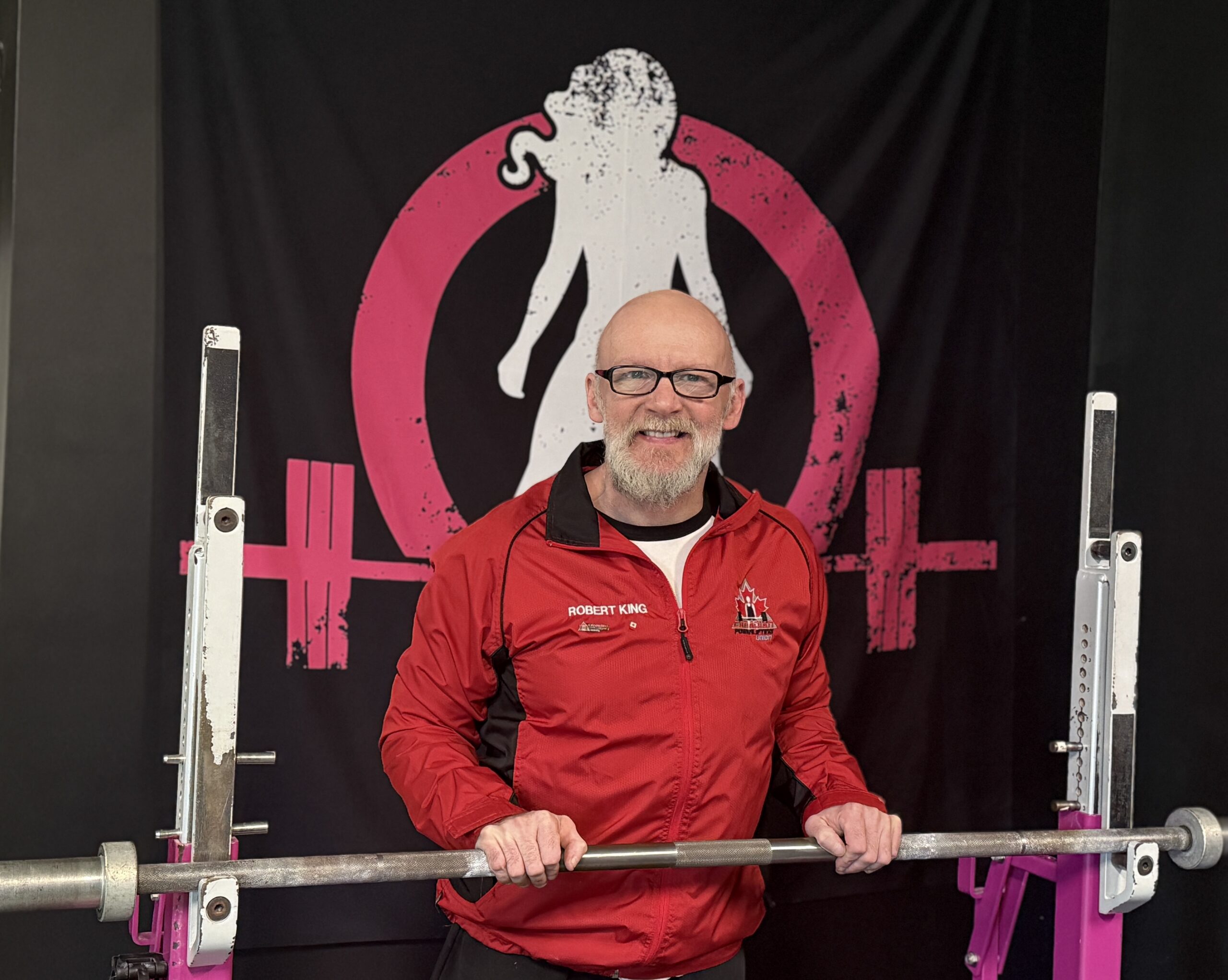
  • Robert King (Coach Rob)
    Founder, Women Who Lift Weights

    Robert King is a strength coach and IPF World Champion Powerlifter with more than 30 years of coaching experience. He is a 6x Team Canada Powerlifting Coach, founder of Women Who Lift Weights (WWLW), creator of the WWLW App, and owner of Heavy Weights Barbell Club in Newfoundland, Canada.

    Robert has coached everyone from complete beginners to international-level athletes, helping thousands of women build strength, improve confidence, and develop sustainable training habits through evidence-based strength training. His coaching philosophy is simple: build strength first, and everything else gets easier — stronger women move better, feel better, perform better, and stay healthier for life.

    Robert is a published author, and through WWLWGym.com and the WWLW App, he shares practical training advice, educational articles, and proven programs designed to help women train smarter and get stronger. He holds certifications through StrongFirst, Training for Warriors, and Olympic Weightlifting.

Similar Posts

Leave a Reply

Your email address will not be published. Required fields are marked *