The Iron Training Philsopophy
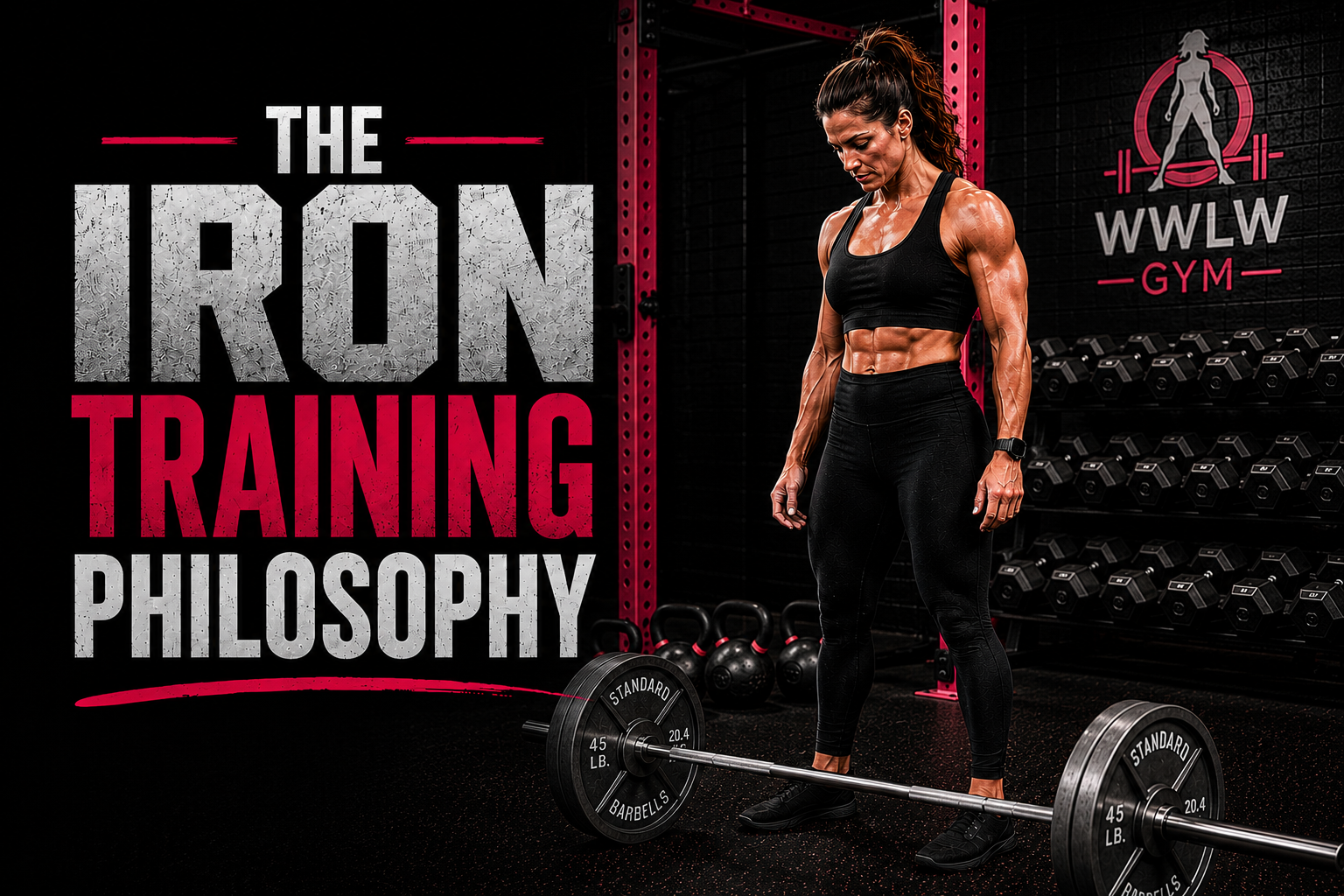
The Iron Training Philosophy
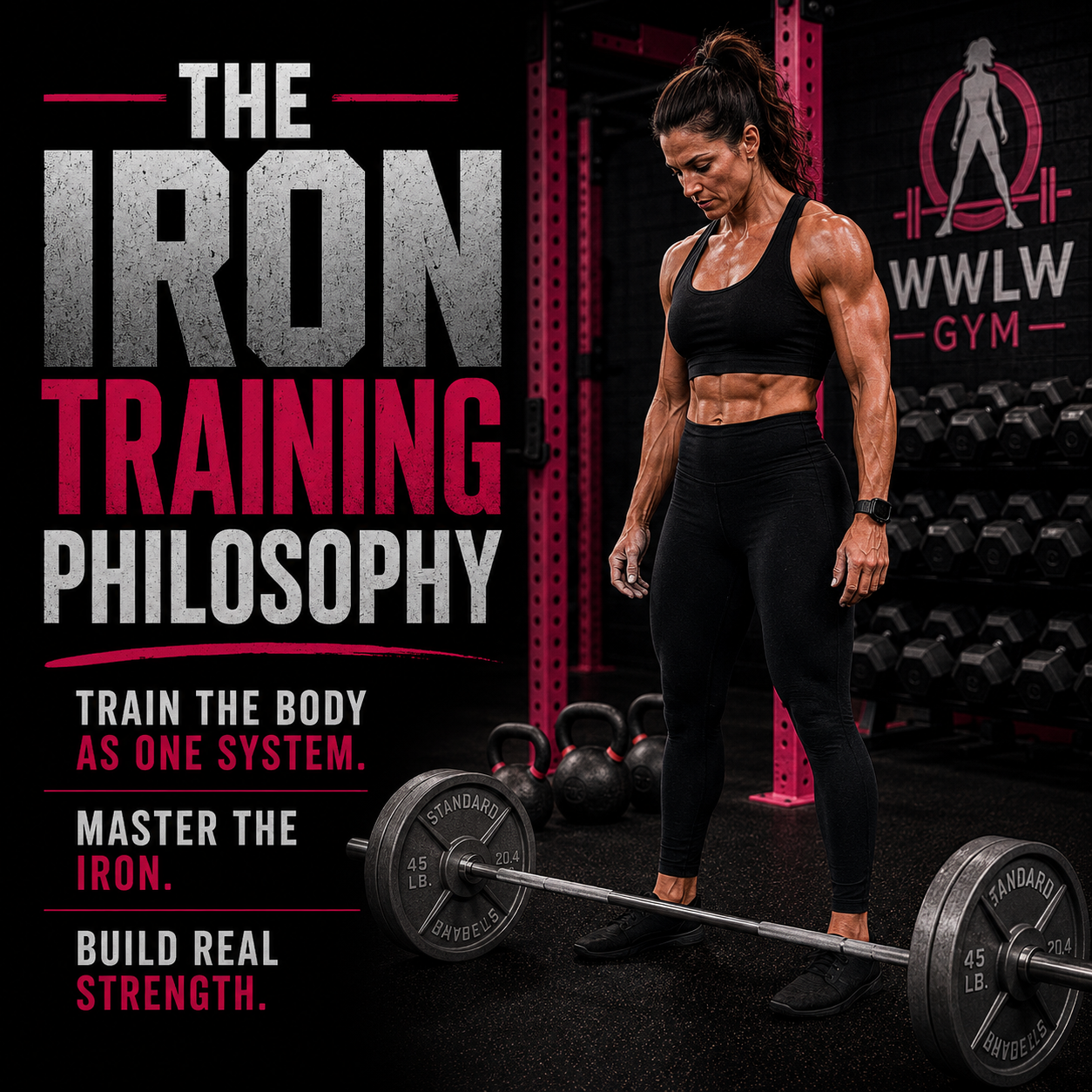
Barbells. Dumbbells. Kettlebells. We call it “The Iron” — and it’s the language every workout, every program, and every athlete I’ve ever coached has been built around.
Over 30 years of coaching women, I’ve picked up plenty of tricks, trends, and tools along the way. Most of them faded. What’s left, after three decades, is a small set of principles that never stopped being true — whether I was coaching a woman doing her first squat or an athlete standing on an international powerlifting platform.
This is that philosophy. Not a workout. Not a program. The thinking underneath all of it — the reason WWLW trains the way it does.
Master The Fundamentals
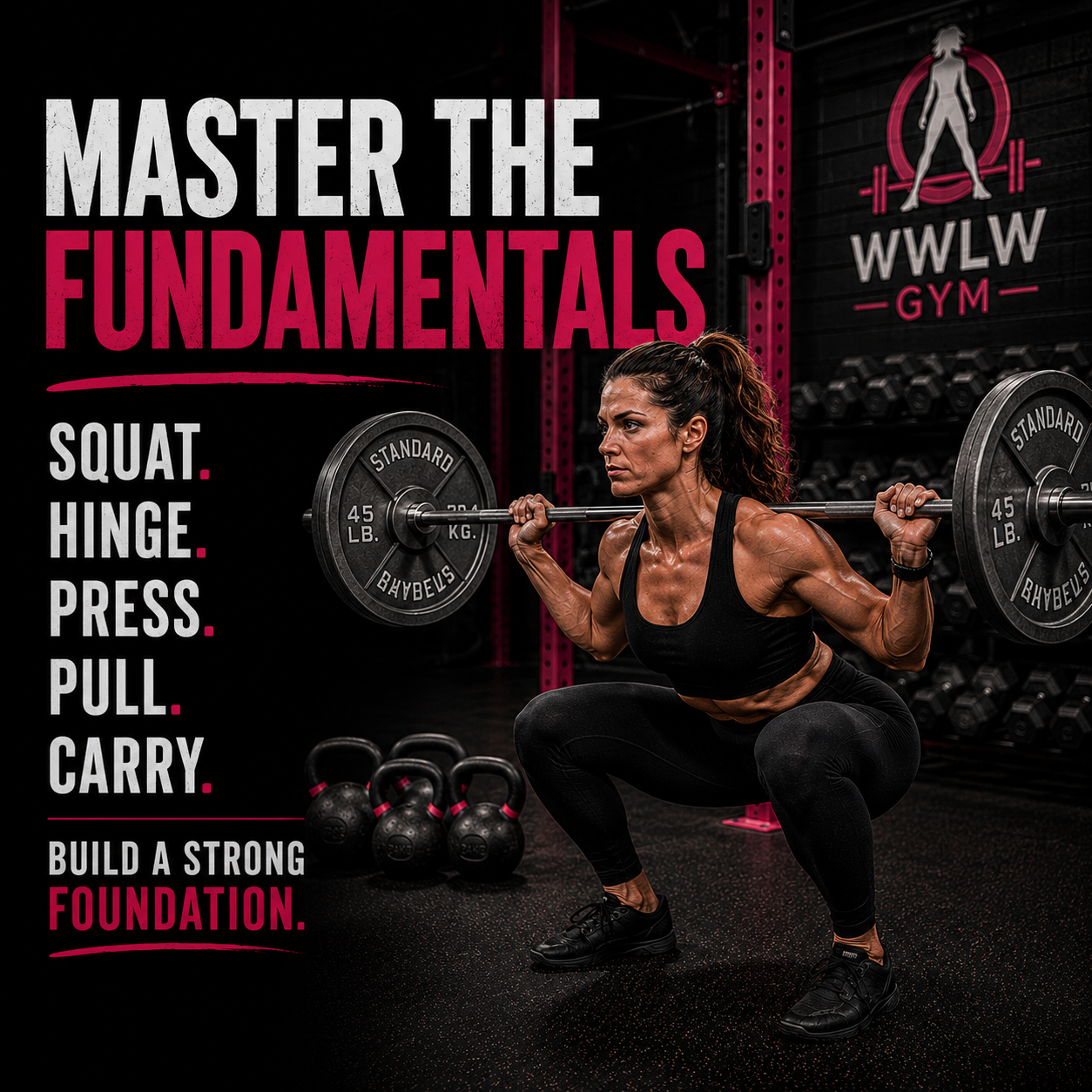
Before we talk philosophy, let’s talk about what everything is built on: squat, hinge, press, pull, carry.
These aren’t exercises. They’re movement patterns — the basic vocabulary your body already knows how to speak. Every effective program, whether it’s built around a barbell, a pair of dumbbells, or a kettlebell, is really just a different dialect of these same five movements. Learn to squat, hinge, press, pull, and carry well, and you’ve got the foundation to build almost anything on top of it.
That’s why we build training around movements first, and muscles second. Chase the pattern, and the muscle takes care of itself.
The Hinge — Barbell Deadlift
The Press — Barbell Bench Press
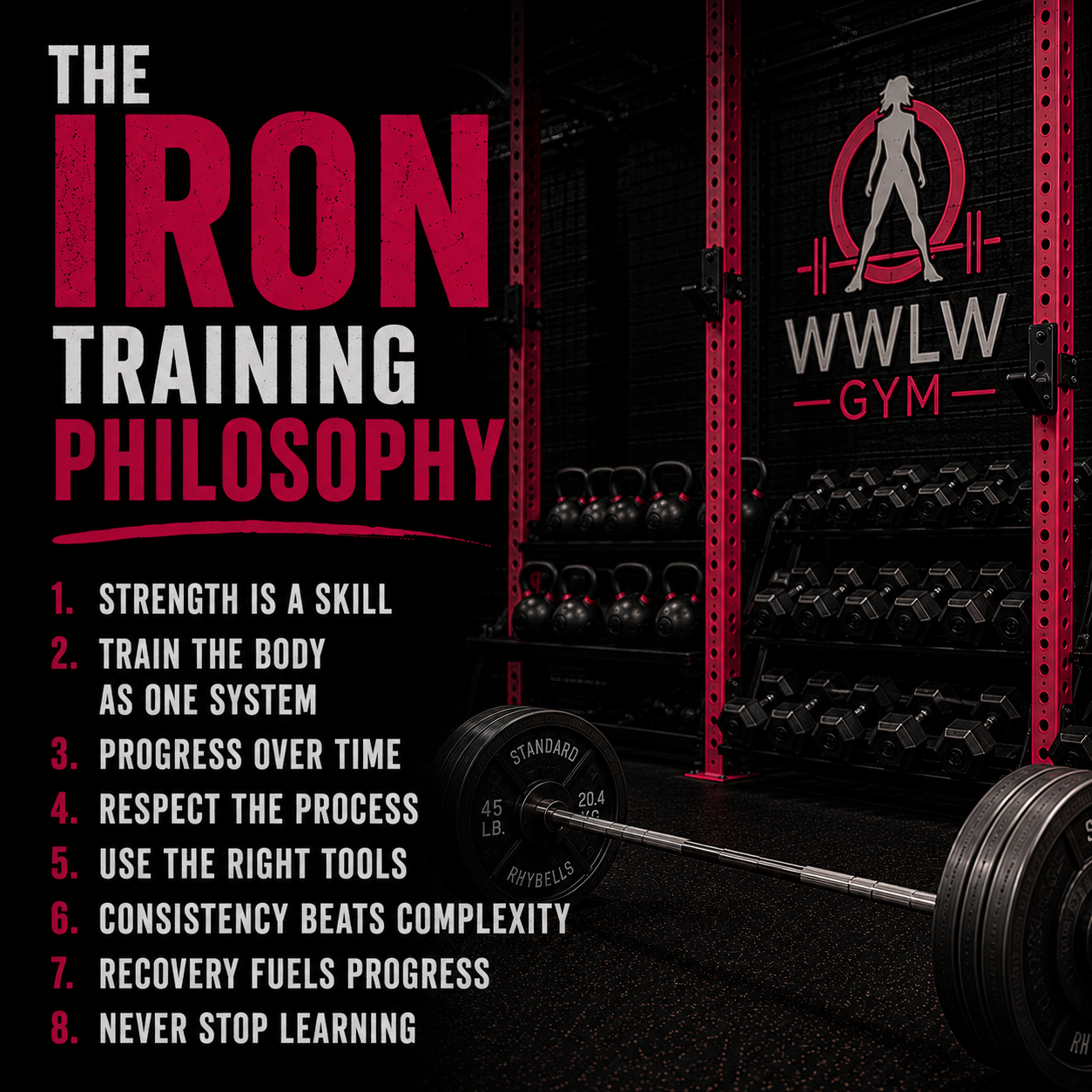
The 8 Principles
Everything we do at WWLW comes back to eight ideas. Some of them are about how you move. Some are about how you think. All of them, together, are what I mean when I talk about “The Iron Training Philosophy.”
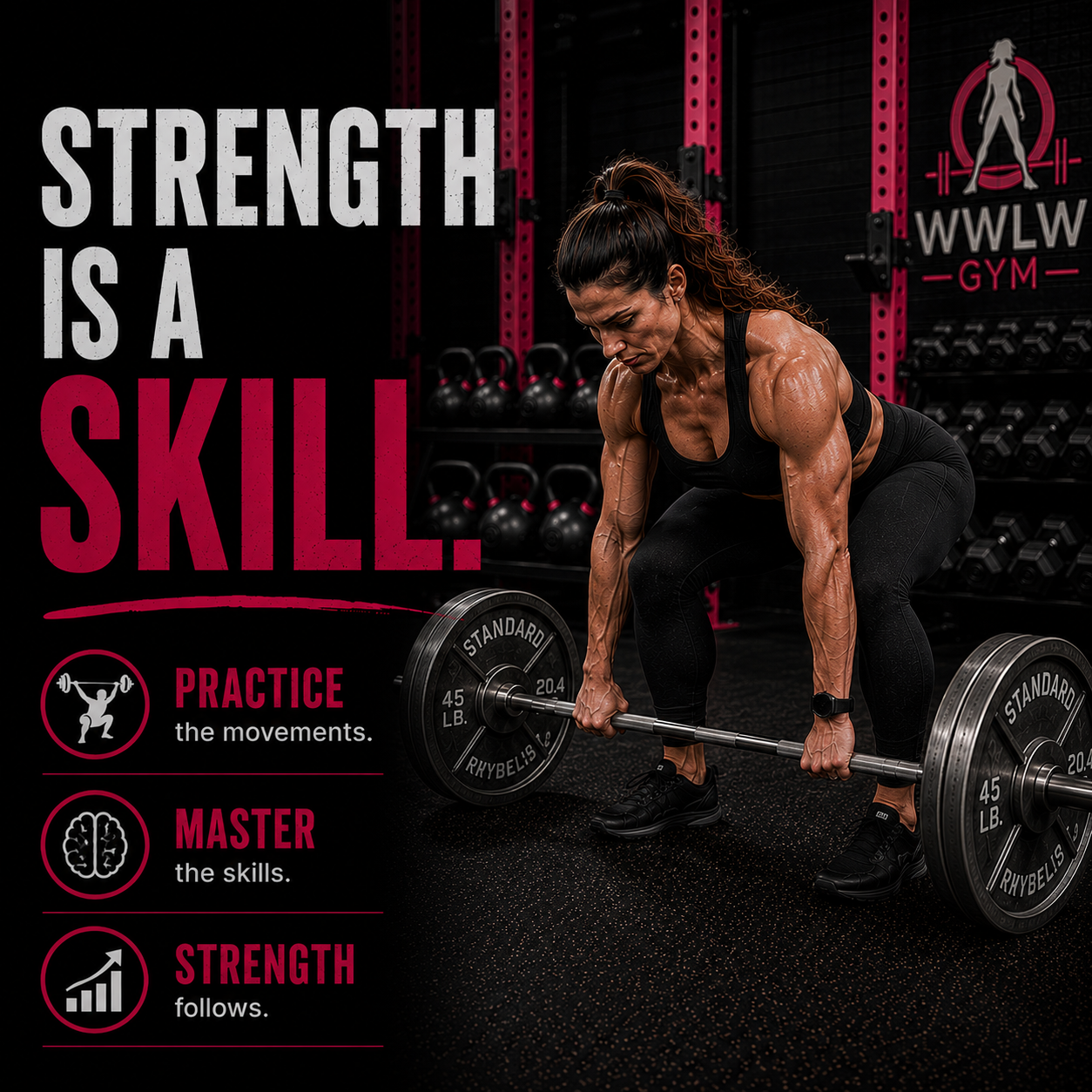
Strength Is A Skill
People treat strength like it’s a trait — you either have it or you don’t. It isn’t. Strength is a skill, and skills are built through practice, not luck or genetics.
Nobody sits down at a piano for the first time and plays a concerto. You wouldn’t expect to. But put a barbell in someone’s hands and there’s this pressure to lift heavy immediately, as if the weight on the bar is what matters most. It isn’t. Position matters most. Control matters most. The weight comes after.
Practice the movement. Master the skill. Strength follows — every time, in that order, never the other way around.
Train The Body As One System
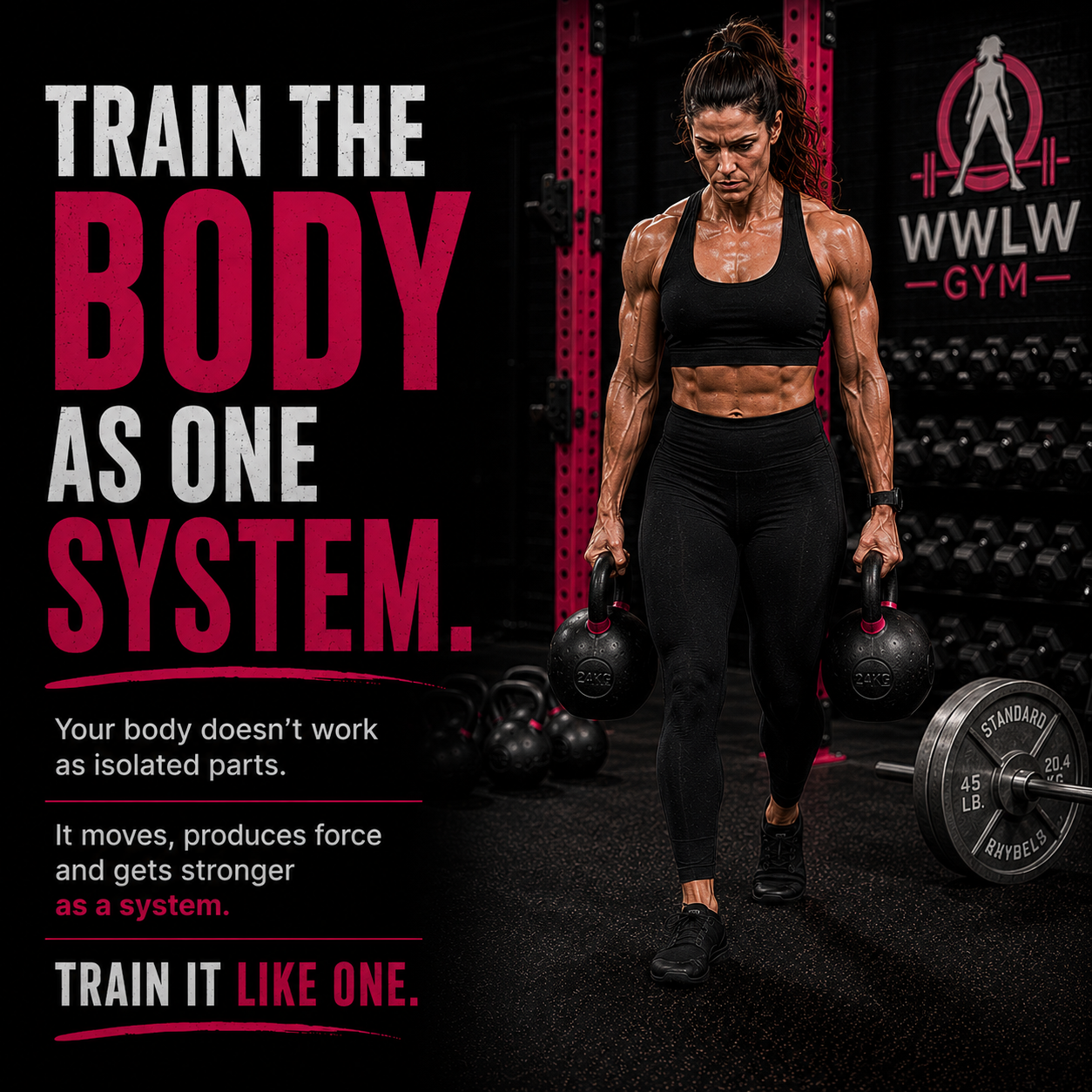
Your body doesn’t work as isolated parts. It never has. When you deadlift, your grip, your back, your hips, your legs, and your core all fire together, in sequence, as one coordinated system. Try to train it like a collection of separate muscles and you’ll build parts that don’t work well together.
That doesn’t mean we never isolate a muscle — sometimes that’s exactly the right tool for a specific goal. But the foundation of how we train is built on movements that ask your whole body to work as a team: squat, hinge, push, pull, carry, brace.
Your body moves, produces force, and gets stronger as a system. Train it like one.
Progress Over Time
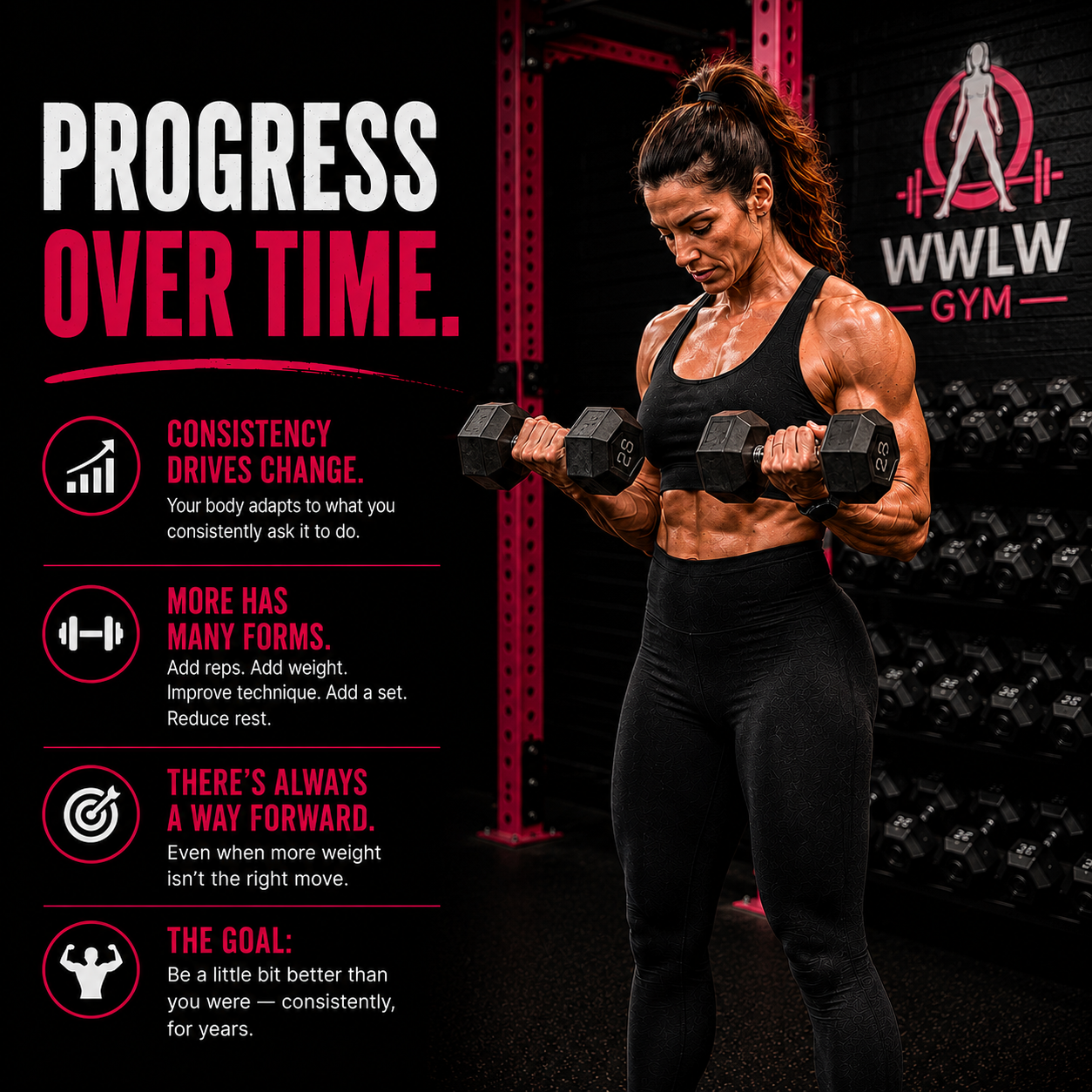
Your body only adapts to what you consistently ask it to do. Ask for the same thing forever, and it’ll give you the same thing forever. That’s not a flaw — it’s exactly how the human body is supposed to work. Progress is simply the process of asking for a little more, on purpose, over time.
And “more” doesn’t only mean heavier. You can add reps. Improve your control. Clean up your technique. Add a set. Reduce your rest. There are more ways to progress than most people realize, which means there’s almost always a way forward, even on a week when adding weight isn’t the right call.
The goal was never to have one great workout. It’s to be a little bit better than you were — consistently, for years.
Respect The Process
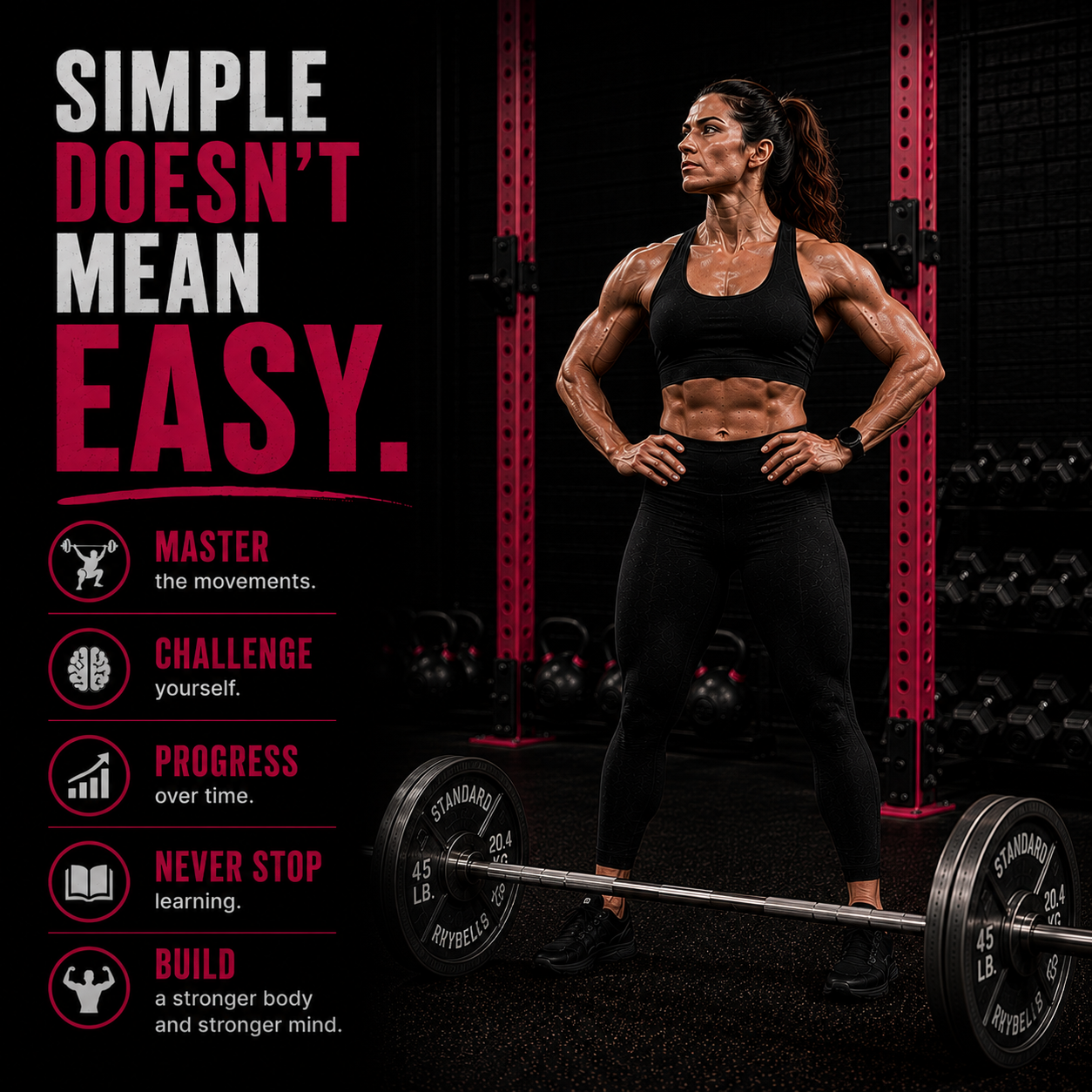
Simple doesn’t mean easy. That trips people up more than almost anything else in training. The principles in this article aren’t complicated — you could probably repeat most of them back to me right now. Living by them, day after day, for years, is a completely different thing.
Respecting the process means trusting that mastering the movements, challenging yourself honestly, and progressing gradually will get you there — even on the days it doesn’t feel like it. It means not skipping steps because you’re impatient, and not abandoning the plan because week three didn’t look like week twelve.
Every rep is building two things at once: a stronger body, and a stronger mind. Respect the process, and both of them show up.
Use The Right Tools
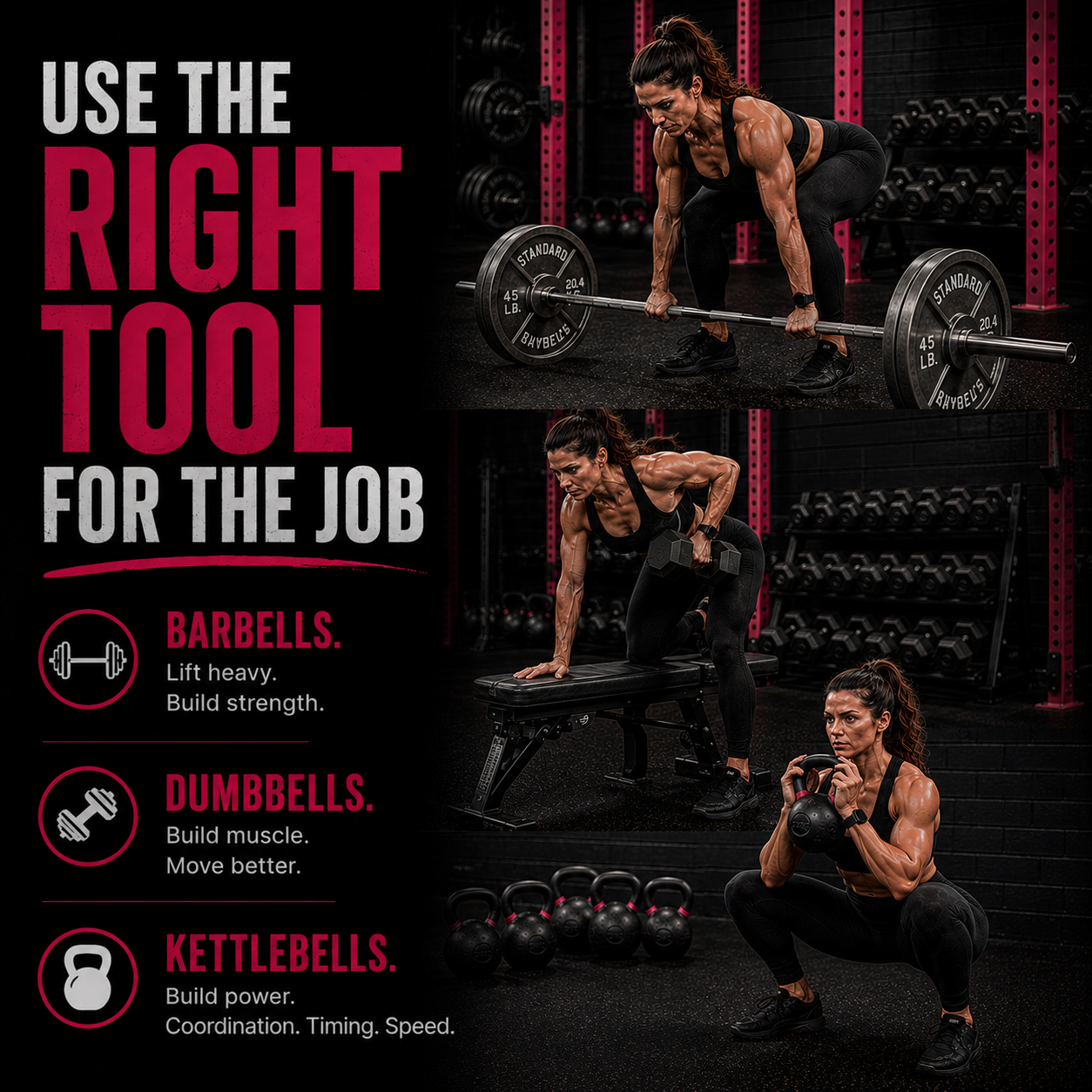
I get asked constantly which is better: barbells, dumbbells, or kettlebells. Wrong question. They’re not competing with each other — they’re different tools that do different jobs well.
Barbells let you lift heavy and build raw strength efficiently — nothing loads a movement pattern quite like a bar. Dumbbells train each side of your body independently, building muscle while exposing and correcting imbalances a barbell can hide. Kettlebells are unmatched for building power, coordination, timing, and speed — qualities that barbells and dumbbells don’t train nearly as well.
A good program doesn’t pick a favorite. It reaches for whichever tool actually gets the job done.
Dumbbells — Sumo Squat
Kettlebells — Swing
Kettlebells — Complex
Consistency Beats Complexity
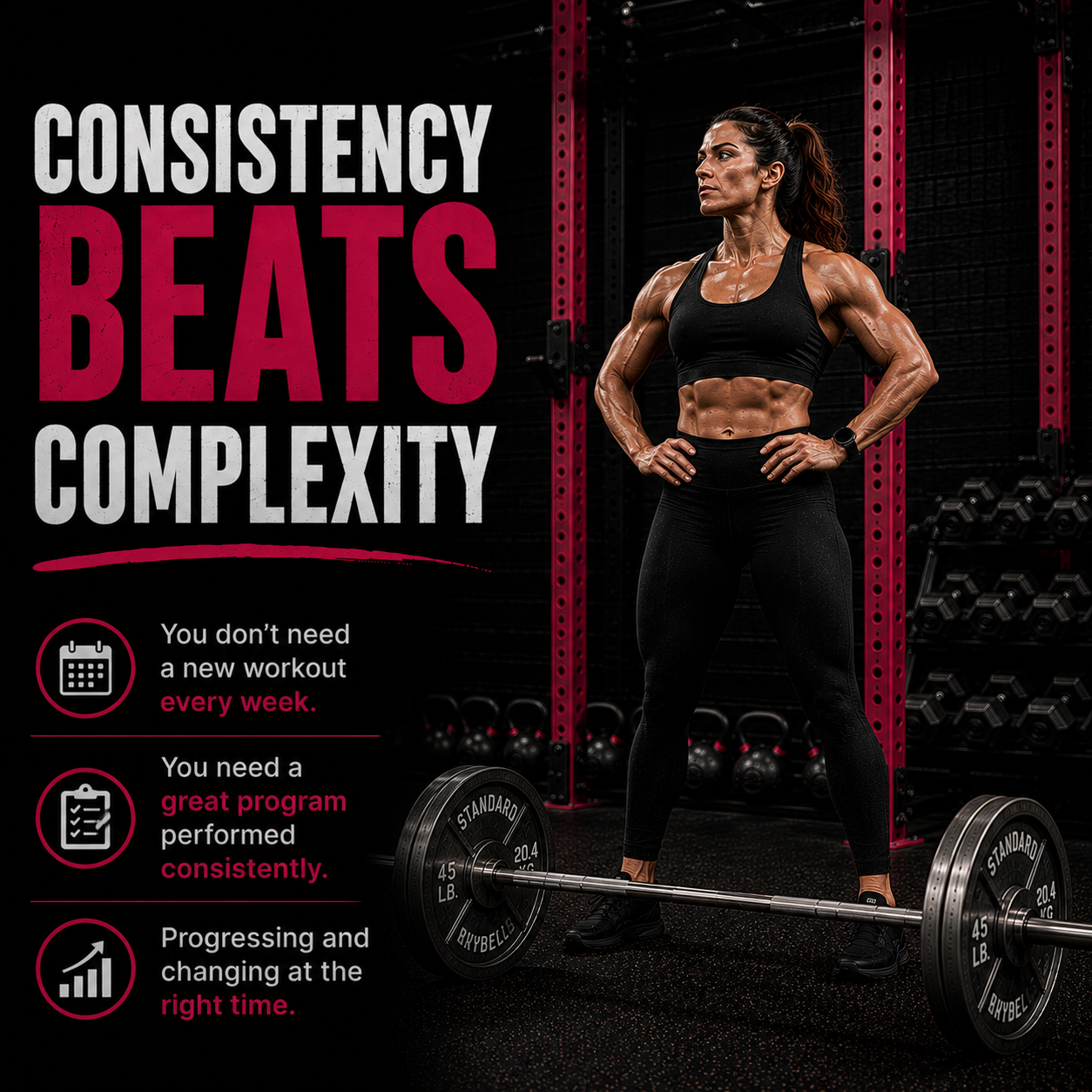
You don’t need a new workout every week. I’d argue that’s actually one of the fastest ways to stall your progress. If your program keeps changing before you’ve had the chance to get better at it, you’re never actually building anything — you’re just staying busy.
What you need is a great program, performed consistently, long enough to actually work. Novelty feels productive in the moment. Repetition, tracked and progressed intelligently, is what actually produces results.
That doesn’t mean never changing anything. It means changing at the right time — when you’ve plateaued, when your goals shift, when the program has genuinely done its job. Progressing and changing at the right time, not just for the sake of change.
Recovery Fuels Progress
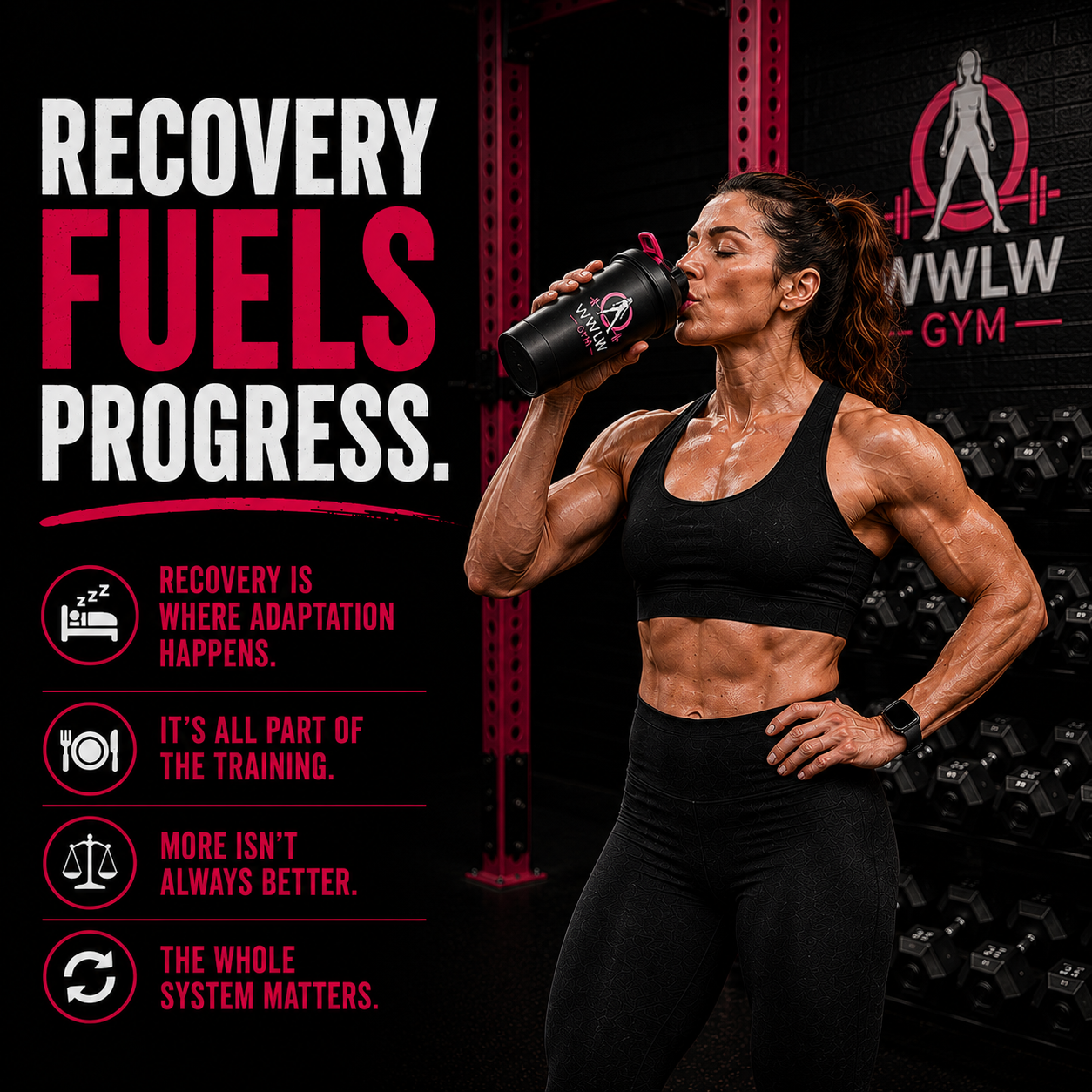
Training creates the stimulus. Recovery is where your body actually adapts to it. Skip that second half of the equation and you’re not training smart — you’re just accumulating fatigue.
Sleep, nutrition, and managing how much you’re asking your body to do are not separate from training. They’re part of it. More workouts, more volume, and less rest doesn’t automatically mean more progress — past a certain point, it works against you.
Train hard. Recover just as hard. That’s not a compromise — it’s the whole system working as intended.
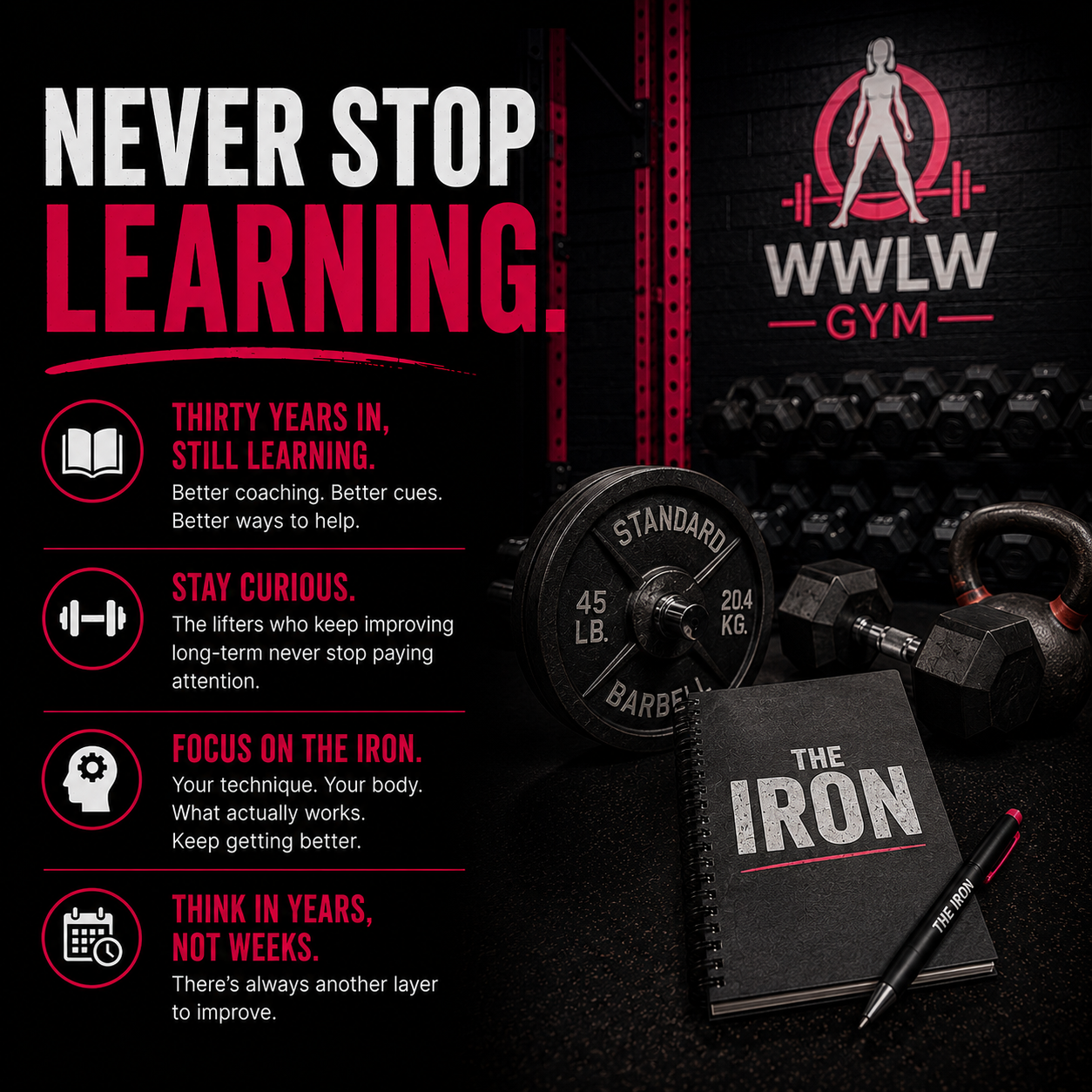
Never Stop Learning
Thirty years in, I’m still learning. Still refining how I coach a squat. Still finding better ways to explain the hinge to someone feeling it for the first time. If I ever stop learning, I stop being able to help the women in front of me — and that’s true for you and your own training too.
The lifters who are still making progress five and ten years from now aren’t the ones who mastered everything early and stopped paying attention. They’re the ones who stayed curious — about their technique, their body, and what actually works for them.
Think in years, not weeks. There’s always another layer to get better at.
Key Takeaway
Train the body as one system. Master The Iron. Build real strength.
None of these eight principles are complicated. Living by all eight, consistently, for years — that’s the actual work. That’s The Iron Training Philosophy.
Master The Iron. Build Real Strength.
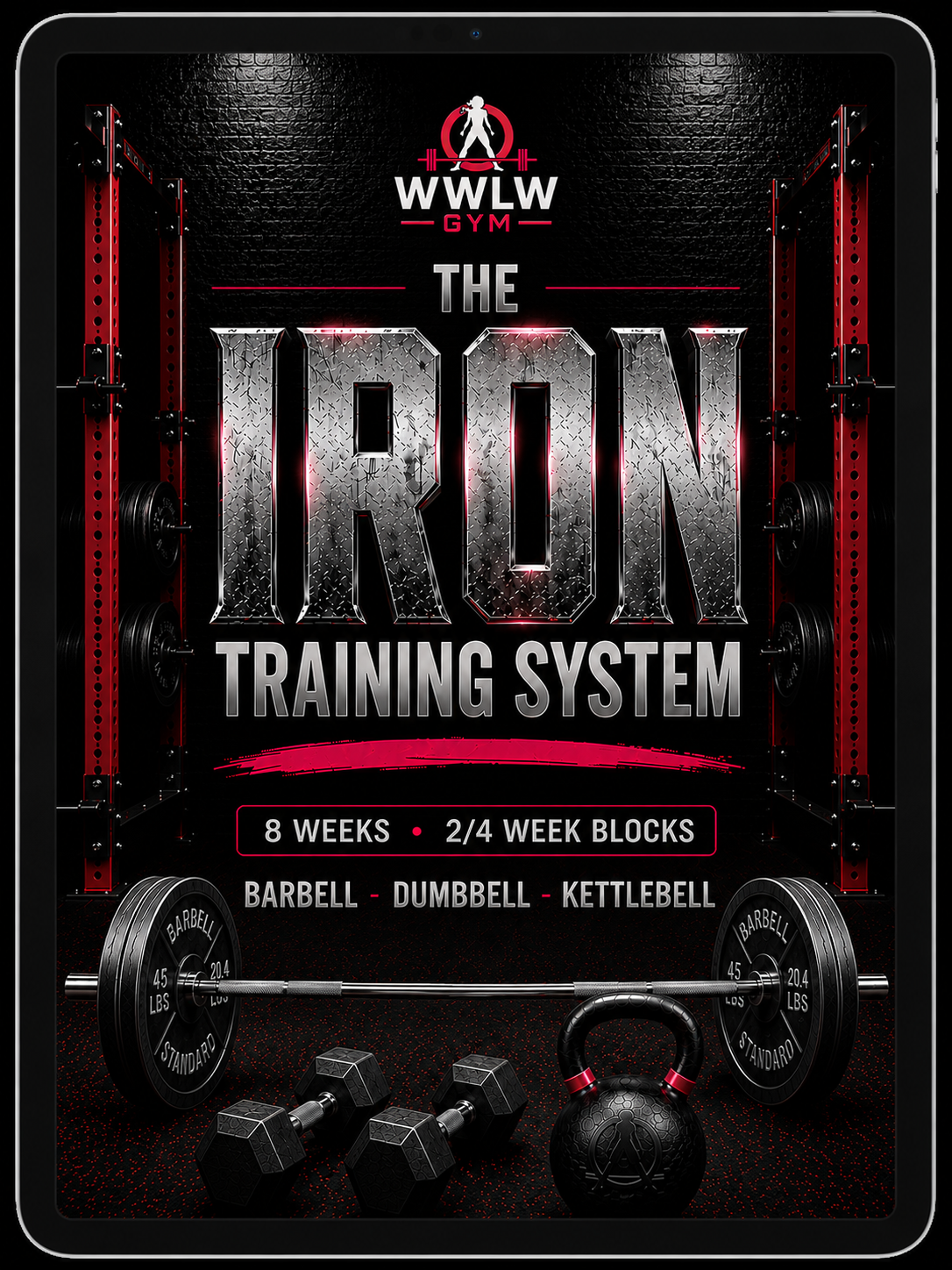
Two progressive 4-week training blocks built around barbells, dumbbells, and kettlebells — the complete system for building strength, muscle, and confidence, one phase at a time.
Instant Digital Access • Train With The Tools You Already Have
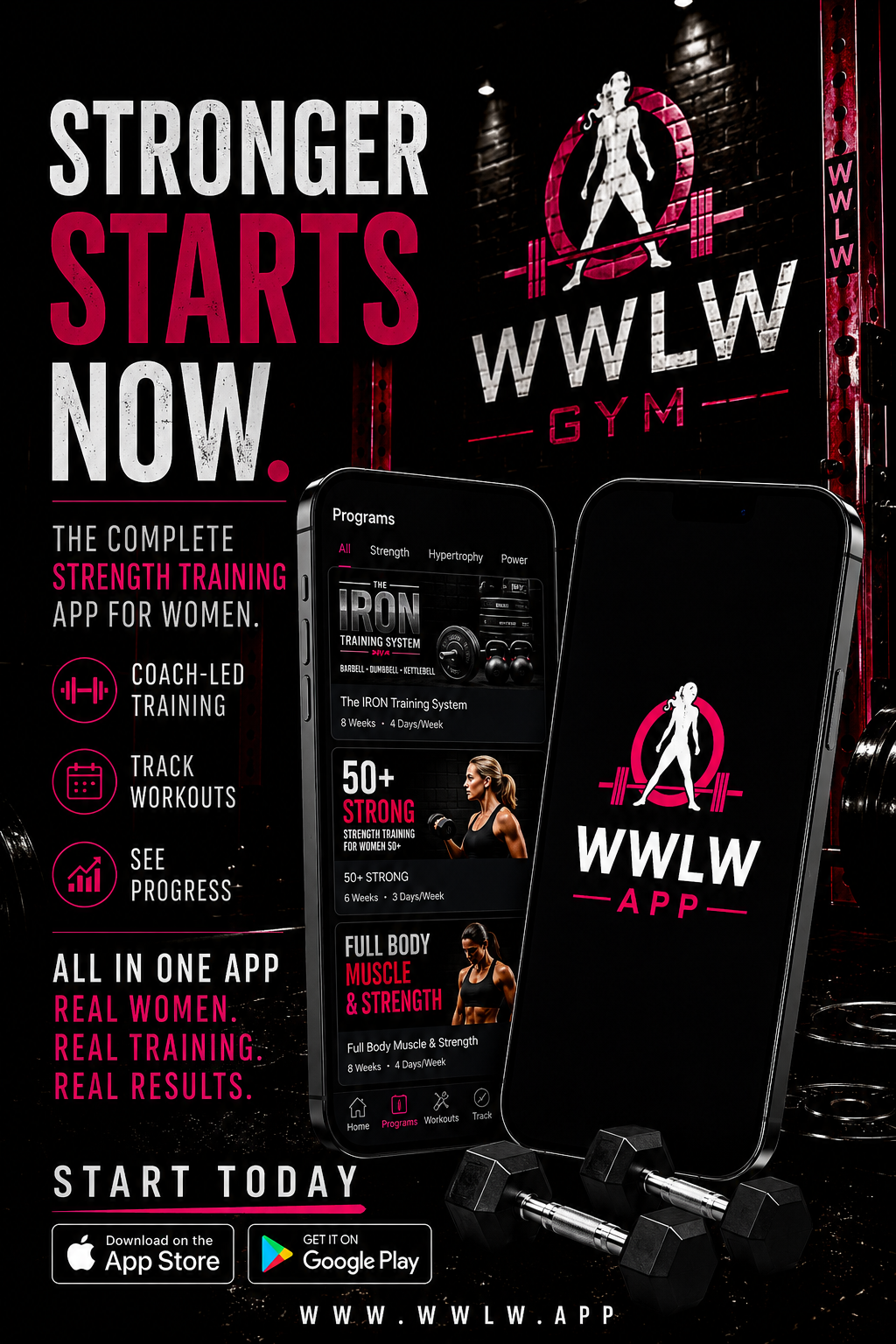
Stronger Starts Here
Structured programs, tracking, and coaching — everything you need to get stronger, all in one app.
Author
-
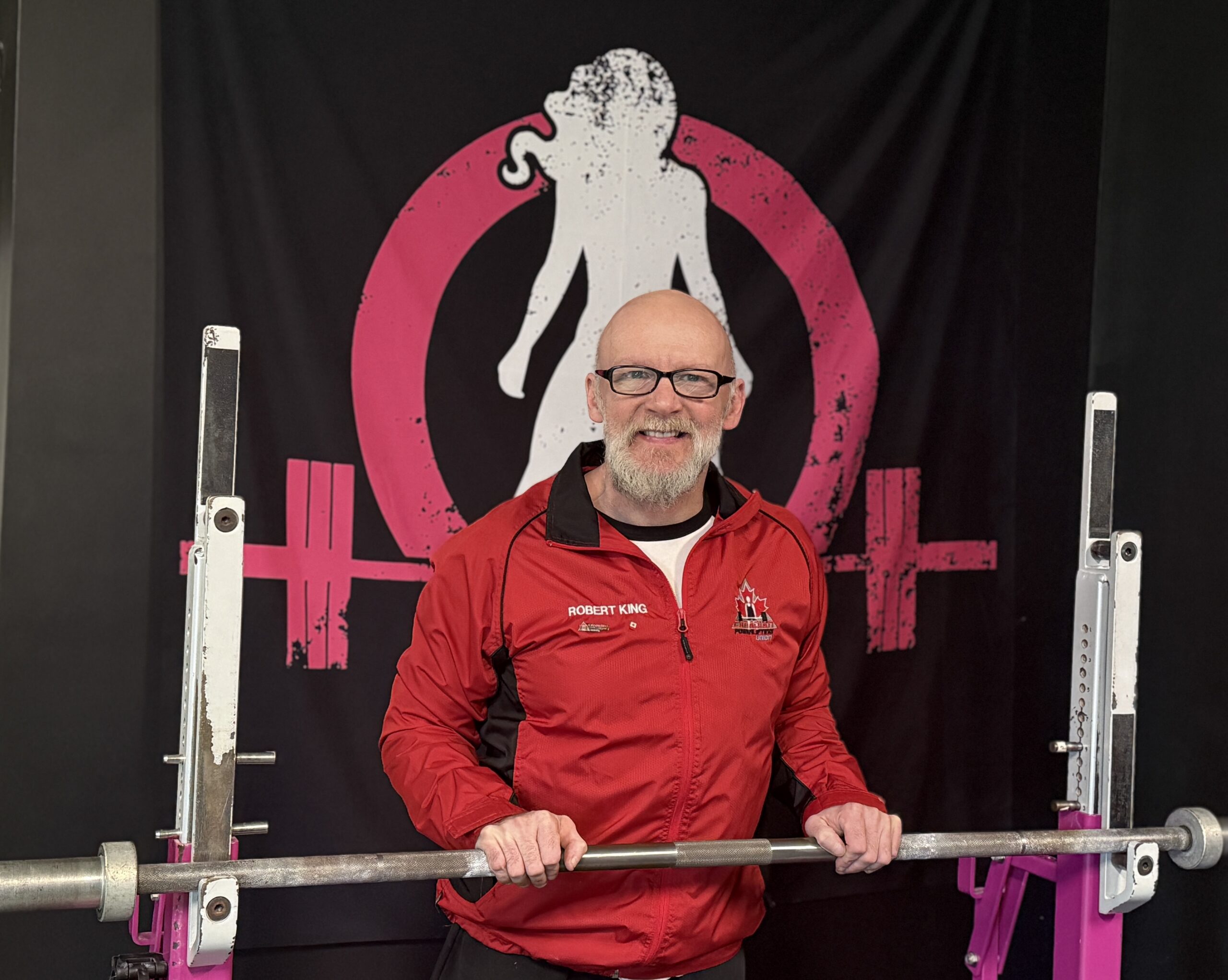
Robert King (Coach Rob)
Founder, Women Who Lift WeightsRobert King is a strength coach and IPF World Champion Powerlifter with more than 30 years of coaching experience. He is a 6x Team Canada Powerlifting Coach, founder of Women Who Lift Weights (WWLW), creator of the WWLW App, and owner of Heavy Weights Barbell Club in Newfoundland, Canada.
Robert has coached everyone from complete beginners to international-level athletes, helping thousands of women build strength, improve confidence, and develop sustainable training habits through evidence-based strength training. His coaching philosophy is simple: build strength first, and everything else gets easier — stronger women move better, feel better, perform better, and stay healthier for life.
Robert is a published author, and through WWLWGym.com and the WWLW App, he shares practical training advice, educational articles, and proven programs designed to help women train smarter and get stronger. He holds certifications through StrongFirst, Training for Warriors, and Olympic Weightlifting.